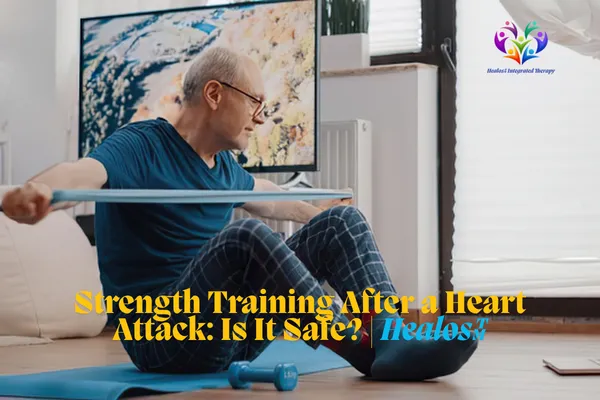
Strength Training After a Heart Attack: Is It Safe? | Healos™
Is Weightlifting Safe After a Heart Attack? Strength Training Evidence and a Starter Plan
For many heart attack survivors, the dumbbells in the basement became off-limits overnight. Lifting feels like exactly the kind of strain a recovering heart should avoid, and nobody quite said when, or whether, it was okay again.
The evidence has moved a long way from "avoid heavy lifting forever".
Here is the short answer. For most people who have had a heart attack, stent or bypass, strength training is safe and recommended once your care team clears you, usually two to three days a week at light to moderate effort alongside aerobic exercise. The main precautions are to avoid breath-holding, build up gradually, protect the breastbone after bypass and stop for warning symptoms.
简短的答案: 对很多心梗幸存者来说,地下室的哑铃一夜之间成了禁区:举重似乎正是康复中的心脏该避免的用力,却没人明确说过什么时候、能不能再练。证据早已远离「永远别提重物」。对大多数心梗、支架或搭桥后的人来说,医疗团队许可后,力量训练安全且被推荐,通常每周 2–3 天、轻到中等强度,并与有氧运动结合;主要注意事项是避免憋气、循序渐进、搭桥后保护胸骨、出现警示症状立即停止。
Is strength training safe after a heart attack?
For most people, yes. A 2023 American Heart Association scientific statement reviewed the evidence and concluded that resistance training is safe and beneficial for most people with cardiovascular disease, recommending it on two or more days a week alongside aerobic activity (Paluch et al., Circulation, 2023). Cardiac rehabilitation programmes include resistance work for this reason.
The benefits go beyond bigger muscles. Strength training improves the ability to carry groceries, climb stairs and get up from a chair, which means everyday tasks take a smaller share of the heart's capacity. It improves blood sugar control and body composition, and modestly lowers blood pressure. In a large meta-analysis, muscle-strengthening activity was associated with a 10–17% lower risk of death from all causes and from cardiovascular disease (Momma et al., British Journal of Sports Medicine, 2022).
The catch is that most people never get proper guidance. Only about 24% of eligible adults in the US attend cardiac rehab (Ritchey et al., 2020), where strength training is usually introduced safely (see after cardiac rehab ends).
心梗后力量训练安全吗: 对大多数人来说是安全的。2023 年美国心脏协会科学声明回顾证据后认为,抗阻训练对大多数心血管病患者安全且有益,建议每周两天或以上,并与有氧活动结合(Circulation 2023),心脏康复项目也因此包含抗阻训练。
益处不只是肌肉变大:力量训练提高提购物袋、爬楼梯、从椅子上站起来的能力,让日常任务占用心脏能力的比例更小;还改善血糖控制和身体成分,适度降低血压。大型荟萃分析中,肌肉强化活动与全因和心血管死亡风险降低 10–17% 相关(BJSM 2022)。
问题在于多数人从未得到正确指导:美国只有约 24% 的合格成人参加心脏康复,而力量训练通常就是在康复中被安全引入的。
When can you start lifting after a heart attack, stent or bypass?
Timing depends on what happened and how you're recovering, so your cardiologist or rehab team sets it. As a general pattern:
After a stent (PCI) or an uncomplicated heart attack, light resistance work, often with bands or very light weights, is commonly introduced within the first few weeks of cardiac rehab, once you're stable (see after a stent).
After bypass surgery, the breastbone needs time to heal, typically about six to eight weeks or as your surgical team advises. Until then, avoid lifting, pushing or pulling with the arms beyond the limits you've been given. Leg exercises are often allowed earlier.
Larger heart attacks, heart failure or rhythm problems may need a slower, more supervised start, sometimes after an exercise test.
If you weren't referred to cardiac rehab, ask for a referral; it's the safest place to start.
心梗、支架或搭桥后何时可以开始力量训练: 时机取决于病情和恢复情况,由心脏科医生或康复团队决定。大致规律:支架(PCI)或单纯心梗后,病情稳定时,心脏康复的头几周常会引入轻度抗阻训练,多用弹力带或很轻的重量;搭桥后胸骨需要时间愈合,通常约 6–8 周或按外科团队建议,在此之前手臂的提、推、拉不要超出给你的限制,腿部练习通常可以更早开始;心梗面积较大、心衰或心律问题者可能需要更慢、更有监督的开始,有时要先做运动试验。如果没有被转介心脏康复,请主动要求,那是最安全的起点。
How to lift safely: breathing, effort and warning signs
Breathe, don't strain. Holding your breath while lifting (the Valsalva manoeuvre) causes sharp spikes in blood pressure. Breathe out as you lift, in as you lower, and choose weights you can move smoothly while breathing.
Use effort, not just heart rate. Beta-blockers blunt the heart rate response, so heart-rate targets can be misleading. The Borg rating of perceived exertion is more useful: most cardiac guidance suggests working at "fairly light" to "somewhat hard", roughly 11 to 13 on the 6 to 20 scale.
Moderate weight, more repetitions. Light to moderate loads lifted 10 to 15 times are safer and very effective. Leave two or three repetitions "in the tank".
Stop and seek help for warning signs: chest pain or pressure, unusual breathlessness, dizziness or light-headedness, palpitations or an irregular heartbeat, or pain spreading to the arm, jaw or back. Call 911 if symptoms are severe or don't settle with rest.
如何安全地练:呼吸、强度与警示信号: 呼吸,别憋气:举重时屏气(瓦氏动作)会让血压骤升,用力时呼气、放下时吸气,选择能边呼吸边平稳完成的重量。
看用力感,不只看心率:β 阻滞剂会压低心率反应,心率目标可能误导,Borg 自觉用力量表更有用,多数心脏指南建议在「比较轻松」到「有点吃力」之间,约 6–20 分量表中的 11–13 分。
中等重量、多次重复:轻到中等负荷做 10–15 次更安全也很有效,留两三次余力。
出现警示信号立即停止并求助:胸痛或胸闷、异常气短、头晕、心悸或心律不齐、疼痛放射到手臂下颌或背部;症状严重或休息不缓解请拨打 911。
A simple strength starter plan (once you're cleared)
This is a common starting framework to discuss with your rehab team, not a personal prescription:
Frequency: two non-consecutive days a week, alongside your walking or other aerobic activity.
Exercises: six to eight covering the major muscle groups, such as sit-to-stand, wall push-ups, band rows, step-ups, calf raises, glute bridges and light overhead or biceps work if your sternum is cleared.
Sets and repetitions: start with one set of 10 to 15 repetitions; build to two or three sets over several weeks.
Effort: RPE 11 to 13, breathing throughout.
Progression: when 15 repetitions feel easy for two sessions in a row, increase the weight slightly.
Warm up and cool down with five to ten minutes of easy walking or marching.
Many people start at home with resistance bands and a sturdy chair. The habit matters more than the equipment.
力量训练入门方案(获得许可后): 这是一个常见的起步框架,供你与康复团队讨论,不是个人处方:
频率——每周两天、不连续,配合步行等有氧活动;
动作——6–8 个覆盖主要肌群的动作,如坐站起立、扶墙俯卧撑、弹力带划船、踏台阶、提踵、臀桥,胸骨获准后可加轻度的过顶或二头肌练习;
组数次数——从 1 组 10–15 次开始,几周内逐步加到 2–3 组;
强度——RPE 11–13,全程保持呼吸;进阶——连续两次训练都能轻松完成 15 次时,稍微增加重量;
热身与放松——5–10 分钟轻松步行或原地踏步。
很多人在家用弹力带和一把结实的椅子就能开始,习惯比器材更重要。
How Healos™ supports recovery
Movement is one of the strongest levers in recovery, and strength is the part most people drop after rehab ends. The 91-Day Protocol moves through Clear, Replenish and Repair, three sequenced stages of complementary cellular nutrition and lifestyle support, with check-ins at days 30, 60 and 91 that track activity, including strength sessions, alongside your numbers. Sovereign Monthly · Recovery offers the same support month to month. Neither replaces your rehab team's exercise prescription.
Healos™ 如何支持康复: 运动是康复最有力的杠杆之一,而力量训练是康复结束后多数人最先放弃的部分。91 天方案依次经过减负、补给、修复,提供辅助的细胞级营养与生活方式支持,并在第 30、60、91 天追踪活动(包括力量训练)和各项数字;Sovereign Monthly · Recovery 按月提供同样的支持。两者都不替代康复团队的运动处方。
The bottom line
After a heart attack, stent or bypass, strength training isn't the enemy. For most people it's safe, recommended and linked to longer life, as long as you're cleared first, breathe through every lift, keep the effort moderate, protect your breastbone after bypass and stop for warning signs. Two short sessions a week are enough to start.
结论: 心梗、支架或搭桥后,力量训练不是敌人。对大多数人来说它安全、被推荐,并与更长寿命相关——前提是先获得许可、每次用力都保持呼吸、强度适中、搭桥后保护胸骨、出现警示信号立即停止。每周两次短训练就足以开始。
Frequently asked questions
Can I lift weights after a heart attack? For most people, yes, once your care team clears you. A 2023 AHA scientific statement found resistance training safe and beneficial for most people with cardiovascular disease and recommended it two or more days a week alongside aerobic exercise.
When can I lift after a stent? Light resistance work is commonly introduced within the first few weeks of cardiac rehab once you're stable, but your cardiologist or rehab team sets the timing for you.
How long after bypass surgery can I lift? The breastbone usually needs about six to eight weeks to heal, or as your surgical team advises. Until then, follow the arm lifting, pushing and pulling limits you've been given; leg exercises are often allowed earlier.
How heavy should I lift? Use light to moderate weights you can lift 10 to 15 times while breathing steadily, at a perceived effort of about 11 to 13 on the Borg scale. Avoid holding your breath and leave a few repetitions in reserve.
What warning signs mean I should stop? Stop for chest pain or pressure, unusual breathlessness, dizziness, palpitations or pain spreading to the arm, jaw or back. Call 911 if symptoms are severe or don't settle with rest.
常见问题:
心梗后能举重吗?多数人在医疗团队许可后可以,AHA 2023 认为抗阻训练对多数心血管病患者安全有益,建议每周两天以上。
支架后何时能练?病情稳定时,心脏康复头几周常引入轻度抗阻训练,具体由团队决定。
搭桥后多久能提重物?胸骨通常需约 6–8 周愈合,遵循外科团队的手臂限制,腿部练习常可更早。
练多重?能边平稳呼吸边做 10–15 次的轻到中等重量,Borg 量表约 11–13,避免憋气。
哪些信号要停?胸痛胸闷、异常气短、头晕、心悸、放射痛,严重或不缓解拨打 911。
References
Paluch AE, et al. Resistance exercise training in individuals with and without cardiovascular disease: 2023 update. A scientific statement from the American Heart Association. Circulation. 2024;149(3):e217–e231.
Momma H, et al. Muscle-strengthening activities are associated with lower risk and mortality in major non-communicable diseases: a systematic review and meta-analysis of cohort studies. British Journal of Sports Medicine. 2022;56(13):755–763.
Ritchey MD, et al. Tracking cardiac rehabilitation participation and completion among Medicare beneficiaries to inform the efforts of a national initiative. Circulation: Cardiovascular Quality and Outcomes. 2020;13(1):e005902.
Custom HTML/CSS/JavaScript