Your Stent Worked. Now What? 30 Days, 90 Days and 1 Year | Healos™
Your Stent Worked. Now What? What Really Happens at 30 Days, 90 Days and 1 Year
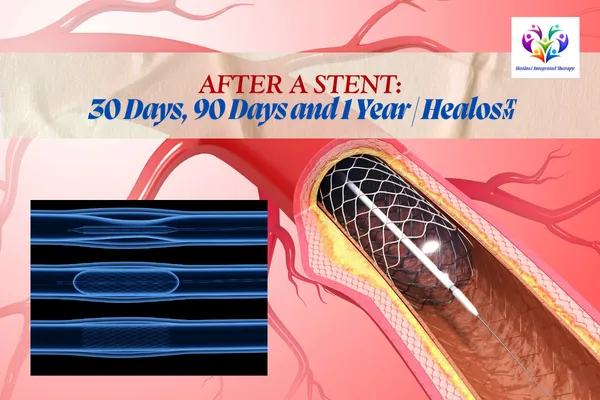
The whole thing can take less than an hour. A small puncture at the wrist or groin, a thin wire threaded to your heart, a balloon inflated, a mesh tube left behind to hold the artery open. Many people go home the next day, sometimes the same day, with a bag of new prescriptions and a strange feeling that something this big shouldn't have been this quick.
That feeling is worth listening to. The procedure was fast. The healing isn't.
Here is the short answer. A stent opens a blocked artery in minutes, but the artery keeps healing around it for months. The first 30 days carry the highest risk of a clot forming in the stent, which is why antiplatelet medicines must never be stopped early. By 90 days most people are active again, and the first year is the key window for lowering the risk of another event.
Here's what's actually happening inside you at each milestone, and what you can do at each one.
简短的答案: 整个过程可能不到一小时:手腕或腹股沟一个小穿刺,一根细导丝通到心脏,球囊扩张,留下一根网状管撑住血管。很多人第二天、有时当天就回家,带着一袋新处方和一种奇怪的感觉:这么大的事不该这么快。这种感觉值得倾听:手术很快,愈合却不快。支架几分钟内打通血管,但血管会在支架周围持续愈合数月;头 30 天支架内血栓风险最高,所以绝不能提前停用抗血小板药;到 90 天多数人已恢复活动;第一年是降低再次发病风险的关键窗口。下面逐个里程碑说明体内发生了什么、你能做什么。
Days 0 to 30: why the first month after a stent matters most
When a stent is expanded, it presses against the artery wall and scrapes away the thin inner lining, the endothelium. Until that lining grows back over the metal struts, the bare surface can attract platelets, the blood cells that start clots. Modern drug-eluting stents release medication that slows scar tissue, which is good for keeping the artery open but also slows the regrowth of that protective lining.
That's why this period carries the highest risk of stent thrombosis, a clot forming inside the stent. It's uncommon with today's stents, but when it happens it usually causes a heart attack. The most important protection is dual antiplatelet therapy, or DAPT: aspirin plus a second antiplatelet drug such as clopidogrel, ticagrelor or prasugrel. In a landmark study, stopping antiplatelet therapy early was the strongest predictor of stent thrombosis (Iakovou et al., JAMA, 2005).
What this means in practice:
Never stop or skip your antiplatelet medicines without talking to your cardiologist, even for dental work or another procedure. Other doctors should check with your cardiology team first.
Watch the access site. Some bruising at the wrist or groin is normal. Growing swelling, bleeding that doesn't stop with firm pressure, or a cold, numb hand or leg needs urgent attention.
Take it easy, briefly. Most people can walk and do light activity within days; avoid heavy lifting with the arm or leg used for access for as long as your team advises.
Some chest sensations are common in the first weeks. Pain like your original heart attack, or anything lasting more than a few minutes, is an emergency.
第 0–30 天:为什么第一个月最重要: 支架扩张时会压向血管壁并刮去薄薄的内皮层。在内皮重新长回覆盖金属支架梁之前,裸露表面会吸引启动凝血的血小板。现代药物洗脱支架释放药物减缓瘢痕组织,有利于血管保持通畅,但也减缓了保护性内皮的再生。因此这一阶段支架内血栓风险最高——在现代支架中并不常见,但一旦发生通常会导致心梗。
最重要的保护是双联抗血小板治疗(DAPT):阿司匹林加氯吡格雷、替格瑞洛或普拉格雷。一项里程碑研究显示,提前停用抗血小板药是支架血栓最强的预测因素(JAMA 2005)。
实践要点:未经心脏科医生同意绝不停用或漏服抗血小板药,即使要看牙或做其他手术,其他医生应先与心脏科团队确认;留意穿刺部位,轻微瘀青正常,肿胀扩大、按压止不住的出血或手脚发冷麻木需紧急处理;短暂休养,多数人几天内即可步行和轻度活动,按团队建议避免用穿刺侧肢体提重物;头几周出现一些胸部感觉很常见,但像当初心梗那样的疼痛或持续数分钟以上的不适属于急症。
Days 30 to 90: healing, rehab and getting back to life
By the second and third month, the stent is usually becoming covered by new tissue and the acute danger is lower, although DAPT continues, typically for 6 to 12 months depending on why you had the stent and your bleeding risk.
This is the window to get into cardiac rehabilitation if you haven't already. It reduces heart attacks and hospital admissions (Dibben et al., Cochrane Review, 2021), yet only about 24% of eligible US patients take part (Ritchey et al., Circulation: Cardiovascular Quality and Outcomes, 2020). If you weren't referred, ask.
Most people return to work, driving and normal activity during this period, but timing depends on your job, whether you had a heart attack, and your province's driving rules, so check with your team. It's also the phase when fatigue, low mood and worry often surface, just as life speeds up again. That's common, and it's worth mentioning at follow-up (see why you may still feel unwell after a successful procedure).
Your first follow-up blood tests usually happen here too: cholesterol is typically rechecked 4 to 12 weeks after starting or changing a statin, to see whether you've reached your target.
第 30–90 天:愈合、康复与回归生活: 第二、三个月,支架通常逐渐被新组织覆盖,急性风险降低,但 DAPT 仍在继续,通常为 6–12 个月,取决于放支架的原因和出血风险。这是进入心脏康复的窗口:康复能减少心梗和住院,但美国符合条件的患者只有约 24% 参加,如果没有被转介,请主动询问。多数人在此期间恢复工作、驾驶和正常活动,但时间取决于职业、是否发生过心梗以及所在省份的驾驶规定,请与团队确认。这也是疲劳、情绪低落和担忧常浮现的阶段,恰逢生活重新加速——这很常见,复诊时值得提出。首次复查血液通常也在此阶段:开始或调整他汀后 4–12 周复查胆固醇,看是否达标。
Months 3 to 12: restenosis, habits and the year-one window
In-stent restenosis is a gradual re-narrowing caused by scar tissue growing inside the stent. It's much less common with modern drug-eluting stents than with older bare-metal stents, and when it happens it usually develops within the first 6 to 12 months. The warning sign is typically the gradual return of your old symptoms, such as chest tightness or breathlessness with exertion. Report it; it's usually treatable.
The bigger picture for year one isn't the stent itself. It's the rest of your arteries. A stent treats one narrowing, but atherosclerosis affects the whole arterial tree (see the 10-year cellular timeline). In people with stable coronary disease, adding stents to medical therapy didn't reduce heart attacks or death overall in the ISCHEMIA trial (Maron et al., NEJM, 2020). What protects you long term is everything around the stent: medications, activity, blood pressure, cholesterol, not smoking, sleep and mood.
That's why year one matters so much. After a heart attack, about 18% of survivors have another heart attack, stroke or cardiovascular death within the first year (Jernberg et al., European Heart Journal, 2015). Many of the habits that lower that risk are built, or lost, in these months.
第 3–12 个月:再狭窄、习惯与第一年窗口: 支架内再狭窄是瘢痕组织在支架内生长造成的逐渐再次变窄,现代药物洗脱支架比老式金属裸支架少见得多,若发生通常在头 6–12 个月内。典型信号是旧症状逐渐回来,如活动时胸闷或气短,请及时报告,通常可以治疗。第一年更大的问题不是支架本身,而是其余的动脉:支架处理一处狭窄,动脉粥样硬化却影响整个动脉系统。ISCHEMIA 试验中,稳定性冠心病在药物基础上加支架,总体上并未减少心梗或死亡。长期保护你的是支架周围的一切:药物、活动、血压、胆固醇、戒烟、睡眠和情绪。这就是第一年如此重要的原因:心梗后约 18% 的幸存者第一年内再发心梗、卒中或心血管死亡,而降低风险的很多习惯正是在这几个月建立或丢失的。
After year one: stepping down, not stepping away
Around the one-year mark, many people have their antiplatelet therapy simplified, often to a single agent, according to their cardiologist's assessment of clot and bleeding risk. Follow-up visits spread out. Most people feel well.
This is where the risk of drifting is highest. The stent is healed; the disease that required it hasn't gone anywhere. Continuing statins and other medications, keeping active and tracking your numbers are what keep year two looking like year one (see no symptoms does not mean no risk).
一年之后:降阶,而不是离场: 一年左右,很多人会根据心脏科医生对血栓和出血风险的评估简化抗血小板治疗,常改为单药;复诊间隔拉长,多数人感觉良好。这恰恰是最容易松懈的时候:支架已经愈合,需要它的疾病却没有消失。继续服用他汀等药物、保持活动、追踪数字,才能让第二年和第一年一样好。
How Healos™ supports the first year after a stent
Healos™ is designed for the space between your cardiology appointments. The 91-Day Protocol covers the critical first months, moving through Detox, Replenish and Repair: complementary cellular nutrition matched to your medication list and pharmacist-reviewed before it ships. Follow-ups at day 30 and day 60 (with a reminder to book your blood test) and a blood-test report review at day 90 turn how you're sleeping, moving, feeling and taking your medicines into a summary you can bring to your cardiologist.
Healos™ 为心脏科复诊之间的空白而设计:91 天方案覆盖关键的头几个月,依次经过排毒、补给、修复,提供与用药清单匹配、发货前经药剂师审核的辅助细胞级营养;第 30 天跟进、第 60 天跟进并提醒验血、第 90 天验血报告解读,把你的睡眠、活动、感受和服药情况整理成可带给心脏科医生的摘要。它是辅助支持,绝不替代抗血小板药、他汀、心脏康复或专科随访。
The bottom line
Your stent worked in an hour. Your artery takes months to heal around it, and your body takes a year to settle into a new normal. Protect the first 30 days by never interrupting your antiplatelet medicines, use days 30 to 90 to get into rehab and back into life, and treat the rest of year one as the window where long-term habits are made.
结论: 支架一小时就起效了,血管却需要数月在支架周围愈合,身体需要一年适应新的常态。头 30 天绝不中断抗血小板药;第 30–90 天进入康复、回归生活;把第一年剩下的时间当作建立长期习惯的窗口。
Frequently asked questions
What happens in the first month after a stent? The artery lining starts to grow back over the stent, and this is the period with the highest risk of a clot forming inside it. Taking your antiplatelet medicines every day, watching the access site and building up light activity are the priorities.
Can I stop my blood thinner after a stent? Not without your cardiologist's approval. Stopping antiplatelet therapy early is the strongest known predictor of stent thrombosis. Dual antiplatelet therapy usually continues for 6 to 12 months, and any change, including before dental work or surgery, should be approved by your cardiology team.
Is chest pain normal after a stent? Mild chest sensations are common in the first weeks, but chest pain similar to your original symptoms, or discomfort lasting more than a few minutes, is an emergency. Call 911 and use nitroglycerin only as your care team instructed.
How long does it take for a stent to heal? The artery lining gradually grows over the stent over several months. Modern drug-eluting stents heal more slowly by design because they reduce scar tissue, which is why antiplatelet therapy continues for months.
What are the risks in the first year after a stent? The main risks are a clot in the stent (highest in the first month), gradual re-narrowing within the stent (usually within 6 to 12 months) and a new event elsewhere in the arteries. After a heart attack, about 18% of survivors have another major event in the first year.
常见问题:
支架后第一个月发生什么?内皮开始覆盖支架,这是支架内血栓风险最高的时期,重点是每天服抗血小板药、留意穿刺部位、逐步增加轻度活动。
可以停用抗血小板药吗?未经心脏科医生同意不可以,提前停药是支架血栓最强的预测因素,DAPT 通常持续 6–12 个月,看牙或手术前的调整也需心脏科同意。
支架后胸痛正常吗?头几周轻微不适常见,但类似当初症状或持续数分钟以上的胸痛属急症,请拨打 911。
支架多久愈合?内皮在数月内逐渐覆盖支架,药物洗脱支架设计上愈合较慢。
第一年有哪些风险?支架内血栓(首月最高)、支架内再狭窄(通常 6–12 个月内)以及其他动脉的新事件;心梗后约 18% 第一年再发主要事件。
References
Iakovou I, et al. Incidence, predictors, and outcome of thrombosis after successful implantation of drug-eluting stents. JAMA. 2005;293(17):2126–2130.
Dibben G, et al. Exercise-based cardiac rehabilitation for coronary heart disease. Cochrane Database of Systematic Reviews. 2021;11:CD001800.
Ritchey MD, et al. Tracking cardiac rehabilitation participation and completion among Medicare beneficiaries. Circulation: Cardiovascular Quality and Outcomes. 2020;13(1):e005902.
Maron DJ, et al. Initial invasive or conservative strategy for stable coronary disease (ISCHEMIA). New England Journal of Medicine. 2020;382:1395–1407.
Jernberg T, et al. Cardiovascular risk in post-myocardial infarction patients. European Heart Journal. 2015;36(19):1163–1170.
Mehta SR, et al. 2018 Canadian Cardiovascular Society/Canadian Association of Interventional Cardiology focused update of the guidelines for the use of antiplatelet therapy. Canadian Journal of Cardiology. 2018;34(3):214–233.