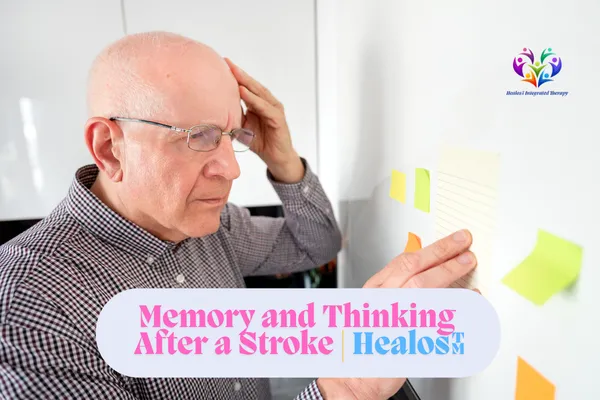
Memory and Thinking After a Stroke | Healos™
Memory and Thinking After a Stroke: Understanding Post-Stroke Cognitive Impairment
"He walks fine now, but he's not quite himself." Families often notice it before anyone else: a parent who loses the thread of conversations, struggles to follow a recipe, forgets appointments or takes much longer to make simple decisions. Because there's no visible weakness, it's easy for these changes to be missed, or mistaken for stubbornness or ageing.
Here is the short answer. Problems with memory, attention, planning or processing speed are common after a stroke, affecting as many as 60% of survivors in the first year, and are often missed because they're less visible than weakness. Some improve over months; some are made worse by depression, poor sleep or another stroke. Screening, blood pressure control, physical activity and targeted rehab give the best chance of protecting thinking.
简短的答案: 「他现在走路没问题了,但就是不太像他自己了。」家属往往比任何人都先注意到:父母聊天时接不上话、照着菜谱做饭很吃力、忘记预约,或者简单的决定也要想很久。因为没有看得见的无力,这些变化很容易被忽视,或被误以为是固执或衰老。
卒中后出现记忆、注意力、计划或处理速度方面的问题很常见,第一年可影响多达 60% 的幸存者,常因不如肢体无力明显而被漏掉;有些会在几个月内改善,有些会因抑郁、睡眠差或再次卒中而加重;筛查、控制血压、身体活动和有针对性的康复,是保护思维能力的最好机会。
What post-stroke cognitive impairment looks like
Thinking problems after a stroke aren't only about memory, and often memory isn't the main issue. The most commonly affected areas are:
Attention: difficulty concentrating, following conversations in a busy room or doing two things at once.
Processing speed: everything takes longer; information seems to arrive slowly.
Executive function: planning, organising, starting tasks, managing money and medicines, solving problems.
Memory: forgetting recent conversations, appointments or where things are.
Language and spatial skills, depending on where the stroke was.
These problems can be mild or severe. A national AHA/ASA scientific statement estimates that cognitive impairment affects as many as 60% of stroke survivors in the first year (El Husseini et al., Stroke, 2023). About 10% of people develop dementia soon after a first stroke, and more than a third after a recurrent stroke (Pendlebury & Rothwell, Lancet Neurology, 2009).
卒中后认知障碍是什么样的: 卒中后的思维问题不只是记忆,记忆往往还不是最主要的。最常受影响的方面有:
注意力——难以集中、在嘈杂房间里跟不上谈话、无法同时做两件事;
处理速度——做什么都更慢,信息好像来得很迟;
执行功能——计划、组织、开始做事、管钱管药、解决问题;
记忆——忘记最近的谈话、预约或东西放在哪里;
语言和空间能力,取决于卒中部位。
这些问题可轻可重。美国心脏协会/卒中协会的科学声明估计,第一年多达 60% 的卒中幸存者有认知障碍(Stroke 2023);约 10% 的人在首次卒中后不久出现痴呆,再次卒中后超过三分之一(Lancet Neurol 2009)。
Why it happens, and what makes it worse
The stroke itself damages brain networks involved in thinking. Many people also have small vessel disease, changes in the brain's tiny arteries from long-standing high blood pressure, which affects thinking on its own (see what happens to your brain after a stroke).
Several common, treatable problems make thinking worse:
Depression, which affects about 31% of survivors (Hackett & Pickles, International Journal of Stroke, 2014) and can look like memory problems.
Fatigue and poor sleep or sleep apnoea (see post-stroke fatigue).
Some medicines, especially sedatives, some sleep aids and strong painkillers.
Hearing or vision problems that make it harder to take in information.
Another stroke, which is why prevention protects thinking as well as movement.
为什么会发生,以及什么会让它加重: 卒中本身会损伤参与思维的大脑网络;很多人还有小血管病——长期高血压导致的大脑细小动脉改变,它本身就会影响思维。几个常见、可以处理的问题会让思维变差:抑郁——约 31% 的幸存者会经历(2014),可能看起来像记忆问题;疲劳、睡眠差或睡眠呼吸暂停;部分药物,尤其镇静药、部分助眠药和强效止痛药;听力或视力问题,让人更难接收信息;再次卒中——所以预防不仅保护行动,也保护思维。
How thinking problems are assessed
If you or your family notice changes, ask for a cognitive screen. A common one is the Montreal Cognitive Assessment (MoCA), a 10-minute test of attention, memory, language and executive function, developed in Canada. Screening is often repeated over time, because results can change in the first months.
If problems are found, a referral to an occupational therapist, neuropsychologist or memory clinic can map strengths and weaknesses and guide practical decisions, such as returning to work, driving and managing medicines and money. Driving rules after stroke vary by province, and cognition is part of the assessment.
Important: sudden new confusion, trouble speaking or understanding, or a change in alertness is a possible new stroke. Remember BE FAST and call 911.
如何评估思维问题: 如果你或家人注意到变化,请要求做认知筛查。常用的是在加拿大开发的蒙特利尔认知评估(MoCA),约 10 分钟,测试注意力、记忆、语言和执行功能;由于头几个月结果可能变化,常会多次复查。如果发现问题,可转介作业治疗师、神经心理学家或记忆门诊,梳理强项和弱项,并指导实际决定,比如复工、驾驶、管理药物和财务;卒中后驾驶规定因省而异,认知是评估的一部分。重要提醒:突然新出现的意识混乱、说话或理解困难、清醒程度改变,可能是新的卒中——记住 BE FAST,拨打 911。
What helps protect and improve thinking
Blood pressure control. In SPRINT MIND, intensive blood pressure control reduced the risk of mild cognitive impairment by about 19% (SPRINT MIND Investigators, JAMA, 2019). After a stroke, keeping pressure on target protects both against another stroke and against further cognitive decline (see blood pressure after a stroke).
Physical activity, which improves blood flow to the brain and supports neuroplasticity.
Cognitive rehabilitation, focused on real-life strategies: routines, checklists, reducing distractions, doing one thing at a time.
Treating depression, sleep apnoea and hearing loss.
Social and mental engagement: conversation, hobbies, volunteering, learning.
A Mediterranean-style diet, not smoking and little or no alcohol.
什么有助于保护和改善思维:
控制血压:SPRINT MIND 中,强化降压使轻度认知障碍风险降低约 19%(JAMA 2019),卒中后让血压达标既预防再次卒中,也防止认知进一步下降;
身体活动:改善大脑血流、支持神经可塑性;
认知康复:聚焦现实生活中的策略——固定作息、清单、减少干扰、一次只做一件事;
治疗抑郁、睡眠呼吸暂停和听力下降;
社交与脑力参与:聊天、爱好、志愿服务、学习;
地中海式饮食、不吸烟、少饮酒或不饮酒。
For families: practical ways to help
Keep routines predictable, with the same times for meals, medicines and rest.
Use external memory: a wall calendar, a whiteboard, phone reminders, a weekly pill organiser.
One thing at a time: short, clear sentences; turn off the TV during important conversations.
Allow extra time, and avoid finishing their sentences.
Watch for safety: cooking, medicines, finances and driving may need support.
Look after yourself, too; caregiver strain is real, and support groups help.
给家属:实用的帮助方法: 保持可预测的作息,吃饭、服药和休息时间固定;使用「外部记忆」:挂历、白板、手机提醒、每周分格药盒;一次一件事:用简短清楚的句子,重要谈话时关掉电视;给足时间,避免替他把话说完;注意安全:做饭、服药、理财和驾驶可能需要协助;也要照顾好自己,照护压力是真实的,互助小组会有帮助。
How Healos™ supports stroke recovery
Healos™ stroke plans are built for the brain's needs, alongside rehab and your stroke team. The 91-Day Protocol moves through Detox, Replenish and Repair, providing stroke-specific complementary nutrition matched to your medication list, with follow-ups at day 30 and day 60 (with a reminder to book your blood test) and a blood-test report review at day 90 that track blood pressure, sleep, mood and daily function in a family-friendly summary. Sovereign Monthly · Recovery continues month to month. It doesn't diagnose or treat cognitive impairment.
Healos™ 如何支持卒中康复: Healos™ 的卒中方案为大脑的需求设计,与康复和卒中团队并行。91 天方案依次经过排毒、补给、修复,提供与用药清单匹配的卒中专属辅助营养,第 30 天跟进、第 60 天跟进并提醒验血、第 90 天验血报告解读,以家属易读的摘要追踪血压、睡眠、情绪和日常功能;Sovereign Monthly · Recovery 按月延续。它不诊断或治疗认知障碍。
The bottom line
Thinking changes after a stroke are common, often invisible and very real: attention, speed and planning are affected as often as memory. Ask for a cognitive screen, treat what makes it worse, such as depression, poor sleep and high blood pressure, keep active and engaged, and use practical strategies at home. Many people improve, and protecting the brain from another stroke protects thinking too.
结论: 卒中后的思维变化很常见、常常看不见,而且是真实的:注意力、速度和计划能力受影响的频率不亚于记忆。要求做认知筛查,处理让它加重的问题(抑郁、睡眠差、高血压),保持活动和参与,在家使用实用策略。很多人会改善,而保护大脑免于再次卒中,也是在保护思维。
Frequently asked questions
Why is my memory bad after a stroke? The stroke can damage brain networks involved in memory and attention, and many people also have small vessel disease. Depression, fatigue, poor sleep and some medicines can make it worse, and these are treatable.
Can thinking problems after a stroke improve? Often, yes, especially in the first months and with rehab, activity and treatment of depression, sleep problems and blood pressure. Some people have lasting difficulties that practical strategies can help with.
How are thinking problems tested after a stroke? A common screen is the Montreal Cognitive Assessment (MoCA). If problems are found, an occupational therapist, neuropsychologist or memory clinic can do a fuller assessment.
How common is cognitive impairment after a stroke? Very common: up to 60% of survivors in the first year. About 10% develop dementia soon after a first stroke, and more than a third after a recurrent stroke.
常见问题:
中风后为什么记忆变差?卒中可能损伤与记忆和注意力相关的大脑网络,很多人还有小血管病,抑郁、疲劳、睡眠差和部分药物会加重,这些可以处理。
中风后的思维问题能改善吗?常常可以,尤其头几个月,配合康复、活动以及治疗抑郁、睡眠和血压。
怎么检查?常用 MoCA 筛查,发现问题可转作业治疗、神经心理或记忆门诊。
有多常见?第一年多达 60%,首次卒中后约 10% 出现痴呆,再次卒中后超过三分之一。
References
El Husseini N, et al. Cognitive impairment after ischemic and hemorrhagic stroke: a scientific statement from the American Heart Association/American Stroke Association. Stroke. 2023;54(6):e272–e291.
Pendlebury ST, Rothwell PM. Prevalence, incidence, and factors associated with pre-stroke and post-stroke dementia: a systematic review and meta-analysis. Lancet Neurology. 2009;8(11):1006–1018.
SPRINT MIND Investigators. Effect of intensive vs standard blood pressure control on probable dementia: a randomized clinical trial. JAMA. 2019;321(6):553–561.
Hackett ML, Pickles K. Part I: frequency of depression after stroke. International Journal of Stroke. 2014;9(8):1017–1025.