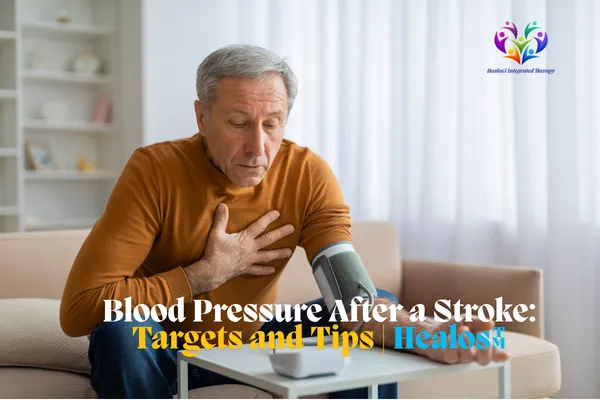
Blood Pressure After a Stroke: Targets and Tips | Healos™
Blood Pressure After a Stroke: Why "Not Too High" Isn't Good Enough
After a stroke, many survivors are told their blood pressure is "a bit high" or "not too bad". It's easy to hear that as reassurance. But for someone who has already had a stroke, "not too high" is usually still too high.
Here is the short answer. After a stroke, blood pressure is the single biggest lever for preventing another one. Current guidelines suggest that most survivors aim for below 130/80, set individually by their team. Each 10 mmHg drop in systolic pressure lowers stroke risk by about 27%, and accurate home readings are the best way to know whether you're actually on target.
简短的答案: 卒中后,很多幸存者被告知血压「有点高」或「还行」,很容易听成安慰。但对已经发生过卒中的人来说,「不算太高」通常仍然太高。
卒中后,血压是预防再次卒中最大的杠杆;现行指南建议多数幸存者目标低于 130/80,由团队个体化设定。收缩压每降 10 mmHg,卒中风险约降低 27%;准确的家庭读数是判断是否真正达标的最好方法。
What should your blood pressure be after a stroke?
The 2021 American Heart Association and American Stroke Association guideline for preventing another stroke recommends a goal of below 130/80 mmHg for most people who have had a stroke or TIA (Kleindorfer et al., Stroke, 2021). Canadian stroke guidance points in the same direction.
"Most people" matters. Your team may set a different target if you're frail, prone to dizziness or falls, have certain narrowed arteries in the neck or head, or are in the first days after the stroke, when blood pressure is managed differently. The target is personal; the principle is that lower, within safe limits, is generally better.
卒中后血压应该是多少: 2021 年美国心脏协会和美国卒中协会的二级预防指南建议,多数卒中或 TIA 患者目标低于 130/80 mmHg(Stroke 2021),加拿大卒中指南方向一致。
「多数人」很重要:如果你衰弱、容易头晕或跌倒、颈部或颅内有某些动脉狭窄,或处于卒中后最初几天(此时血压管理方式不同),团队可能设定不同目标。目标是个人化的,原则是在安全范围内通常越低越好。
Why blood pressure matters more than any other number after stroke
High blood pressure damages small and large arteries in the brain, drives atherosclerosis and is the main cause of bleeding strokes. That's why lowering it has such a large effect:
In a meta-analysis of 123 trials, every 10 mmHg reduction in systolic blood pressure reduced stroke by about 27% (Ettehad et al., Lancet, 2016).
In the PROGRESS trial of people who'd had a stroke or TIA, blood pressure lowering reduced recurrent stroke by 28%, including in people whose blood pressure wasn't considered high to begin with (PROGRESS Collaborative Group, Lancet, 2001).
In the SPS3 trial after small-vessel (lacunar) strokes, targeting systolic pressure below 130 reduced bleeding strokes by about 63% (SPS3 Study Group, Lancet, 2013).
Together, they explain why "a bit high" is worth acting on. It's also why blood pressure is the first of the five numbers worth tracking after a stroke (see five numbers to track).
为什么卒中后血压比任何数字都重要: 高血压损伤大脑的大小动脉、推动动脉粥样硬化,也是出血性卒中的主要原因,所以降压效果如此显著:
123 项试验的荟萃分析中,收缩压每降 10 mmHg,卒中约减少 27%(Lancet 2016);
PROGRESS 试验中,卒中或 TIA 后降压使再发卒中减少 28%,包括起初血压并不算高的人(Lancet 2001);
SPS3 试验中,小血管(腔隙性)卒中后以收缩压低于 130 为目标,出血性卒中减少约 63%(Lancet 2013)。
这就是「有点高」也值得处理的原因,也是血压位列卒中后五个追踪数字之首的原因。
Why home readings matter
A single clinic reading can mislead in both directions. Some people read higher at the doctor's office than in daily life ("white-coat" effect); others read normal in the clinic but high at home or overnight ("masked" hypertension). Home readings over several days give your team a truer picture and make it safer to adjust medications.
How to measure correctly:
Use a validated upper-arm cuff in the right size.
Sit quietly for five minutes, back supported, feet flat, arm resting at heart level.
No caffeine, exercise or smoking in the previous 30 minutes; empty your bladder first.
Take two readings one minute apart, morning and evening, for seven days before an appointment.
Write them down or use the monitor's memory, and bring the log.
After a stroke affecting one arm, ask which arm to use; readings can differ between sides.
为什么家庭读数很重要: 单次诊室读数可能两头误导:有人在诊室比日常高(白大衣效应),有人在诊室正常、在家或夜间却偏高(隐匿性高血压)。连续几天的家庭读数让团队看到更真实的情况,也让调药更安全。正确测量方法:
使用尺寸合适、经验证的上臂式血压计;
安静坐 5 分钟,背有支撑、双脚平放、手臂与心脏同高;
测前 30 分钟不喝咖啡、不运动、不吸烟,先排空膀胱;
早晚各测两次、间隔一分钟,复诊前连续 7 天;
记录下来或使用血压计记忆功能,并带去复诊;
卒中影响了一侧手臂时,问医生用哪只手臂,两侧读数可能不同。
Beyond medication: everyday levers for blood pressure
Medication is usually essential after a stroke, and taking it consistently matters as much as the prescription. Alongside it, several habits lower blood pressure meaningfully:
Less sodium: processed and restaurant foods, soy and oyster sauces, cured meats and bread are the main sources.
Daily movement at the level your rehab team recommends.
Alcohol in moderation, or none.
Sleep apnoea screening if you snore or wake unrefreshed; it's very common after stroke and raises blood pressure (see sleep apnoea after a stroke).
Stress and sleep: both affect blood pressure day to day.
When to call: readings repeatedly above your target, very low readings with dizziness or falls, or a sudden very high reading with severe headache, confusion, weakness or vision changes. The last group is an emergency: BE FAST and call 911.
药物之外:日常的降压杠杆: 卒中后通常必须服用降压药,坚持服用和处方本身同样重要。此外,几个习惯能明显降低血压:
少钠——加工和餐馆食品、酱油蚝油、腌肉和面包是主要来源;
按康复团队建议每日活动;适度饮酒或不饮酒;
打鼾或醒来不解乏要筛查睡眠呼吸暂停,它在卒中后很常见并升高血压;
压力和睡眠都会影响每天的血压。
何时联系:读数反复高于目标;很低且伴头晕或跌倒;突然极高并伴剧烈头痛、意识混乱、无力或视力变化——最后一种是急症,记住 BE FAST,拨打 911。
How Healos™ supports stroke recovery
The 91-Day Protocol builds home blood pressure into its check-ins at days 30, 60 and 91, alongside activity, sleep and medications, so your trend is ready for your neurologist or family doctor. Its three stages, Clear, Replenish and Repair, provide complementary cellular nutrition and lifestyle support designed for stroke recovery. Sovereign Monthly · Recovery continues that support month to month. Neither replaces blood pressure medication.
Healos™ 如何支持卒中康复: 91 天方案把家庭血压纳入第 30、60、91 天的评估,与活动、睡眠和用药一起整理成给神经科或家庭医生的趋势;它的减负、补给、修复三个阶段为卒中康复提供辅助的细胞级营养与生活方式支持。Sovereign Monthly · Recovery 按月延续支持。两者都不替代降压药。
The bottom line
After a stroke, "not too high" isn't the goal; for most people the goal is below 130/80, set with your team. Lowering blood pressure is the most powerful thing you can do to prevent another stroke. Measure it properly at home, take your medications consistently, cut back on sodium and bring a week of readings to every appointment.
结论: 卒中后,「不算太高」不是目标;对多数人来说,目标是与团队一起设定的低于 130/80。降压是预防再次卒中最有力的事。在家正确测量、坚持服药、减少钠摄入,每次复诊都带上一周的读数。
Frequently asked questions
What should my blood pressure be after a stroke? For most people, guidelines suggest a goal below 130/80 mmHg after a stroke or TIA. Your team may set a different personal target if you're frail, prone to falls or have certain narrowed arteries.
How can I prevent a second stroke? Blood pressure control is the biggest lever: every 10 mmHg lower systolic pressure reduces stroke by about 27%. Taking prescribed medications, lowering LDL, not smoking, staying active and treating sleep apnoea also help.
How do I take my blood pressure correctly at home? Use a validated upper-arm cuff, sit quietly for five minutes with your arm at heart level, avoid caffeine and exercise for 30 minutes, and take two readings a minute apart morning and evening for seven days.
Is 140/90 okay after a stroke? For most stroke survivors it's above the recommended target of below 130/80. Discuss your home readings with your team, who will set a safe personal goal.
常见问题:
中风后血压控制多少?多数人目标低于 130/80,衰弱、易跌倒或有某些动脉狭窄者团队可能另设目标。
怎么预防二次中风?控压是最大杠杆,收缩压每降 10 mmHg 卒中约降 27%,另外坚持服药、降 LDL、戒烟、活动、治疗睡眠呼吸暂停。
家里怎么测血压?经验证的上臂式血压计,静坐 5 分钟手臂与心脏同高,30 分钟内不喝咖啡不运动,早晚各两次连续 7 天。
140/90 可以吗?对多数卒中幸存者高于推荐目标,请与团队讨论家庭读数。
References
Kleindorfer DO, et al. 2021 Guideline for the prevention of stroke in patients with stroke and transient ischemic attack. Stroke. 2021;52(7):e364–e467.
Ettehad D, et al. Blood pressure lowering for prevention of cardiovascular disease and death: a systematic review and meta-analysis. Lancet. 2016;387(10022):957–967.
PROGRESS Collaborative Group. Randomised trial of a perindopril-based blood-pressure-lowering regimen among 6105 individuals with previous stroke or transient ischaemic attack. Lancet. 2001;358(9287):1033–1041.
SPS3 Study Group. Blood-pressure targets in patients with recent lacunar stroke: the SPS3 randomised trial. Lancet. 2013;382(9891):507–515.