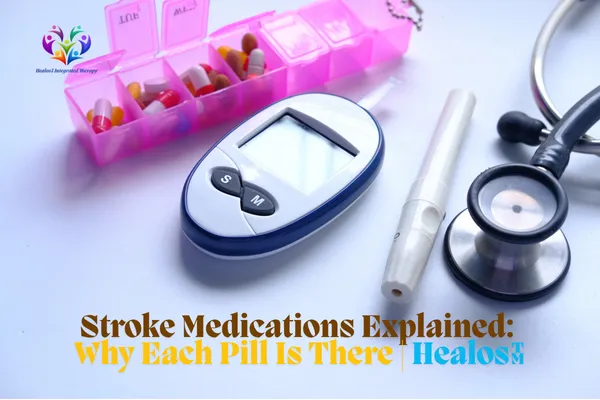
Stroke Medications Explained: Why Each Pill Is There | Healos™
Stroke Medications Explained: Why Each Pill Is There
After a stroke, many people come home with a bag of new prescriptions and only a vague sense of what each one is for. Several sound similar. Some seem to overlap. A few cause side effects. It's no surprise that many people quietly drop one.
Here is the short answer. After an ischaemic stroke or TIA, most people take three kinds of medicine: something to stop clots (antiplatelets, or anticoagulants if the stroke came from atrial fibrillation), a statin to lower LDL cholesterol, and blood pressure medicines. Each has strong trial evidence for preventing another stroke. Yet about one in four people stops at least one within three months, so understanding why each pill is there matters.
简短的答案: 卒中后,很多人带着一袋新处方回家,却只模糊地知道每种药是干什么的:有几种名字相似,有些似乎重复,有些有副作用,难怪很多人悄悄停掉一种。
缺血性卒中或 TIA 后,多数人服用三类药:防血栓的药(抗血小板药;房颤引起的卒中用抗凝药)、降低 LDL 的他汀,以及降压药。每一类都有预防再次卒中的强证据;但约四分之一的人三个月内停用了至少一种,所以弄清每种药为何在那里很重要。
Clot prevention: antiplatelets
Most ischaemic strokes happen when a clot forms on a narrowed or damaged artery, or travels from one, and blocks blood flow in the brain. Antiplatelet medicines, such as aspirin or clopidogrel, make platelets less sticky so clots are less likely to form.
For people with a minor stroke or high-risk TIA, doctors often prescribe two antiplatelets together for a short period, usually about three weeks, then step down to one. In the CHANCE trial, clopidogrel plus aspirin for 21 days reduced recurrent stroke at 90 days to 8.2% from 11.7% with aspirin alone (Wang et al., NEJM, 2013). After that early high-risk window, one antiplatelet is usually continued long term, because the bleeding risk of two drugs starts to outweigh the benefit.
防血栓:抗血小板药: 多数缺血性卒中是血栓在狭窄或受损的动脉上形成(或从那里脱落),堵塞了大脑的血流。阿司匹林、氯吡格雷等抗血小板药让血小板不那么黏,血栓更不容易形成。
对轻型卒中或高风险 TIA,医生常在短期内(通常约三周)同时使用两种抗血小板药,然后减为一种:CHANCE 试验中,氯吡格雷加阿司匹林 21 天,使 90 天再发卒中从单用阿司匹林的 11.7% 降到 8.2%(NEJM 2013)。度过早期高风险窗口后,通常长期使用一种抗血小板药,因为两种药的出血风险开始超过获益。
Clot prevention: anticoagulants for atrial fibrillation
If your stroke came from atrial fibrillation, an irregular heart rhythm that lets clots form in the heart and travel to the brain, you'll usually be prescribed an anticoagulant rather than an antiplatelet. The difference is large: in people with atrial fibrillation, warfarin reduced stroke by about 64% compared with no treatment, while antiplatelets reduced it by only about 22% (Hart et al., Annals of Internal Medicine, 2007).
Most people now take a direct oral anticoagulant (DOAC), such as apixaban, rivaroxaban, edoxaban or dabigatran. Compared with warfarin, DOACs reduced stroke or systemic embolism by about 19% and roughly halved bleeding inside the skull (Ruff et al., Lancet, 2014), with no routine blood tests. Warfarin is still used in some situations, such as mechanical heart valves.
防血栓:房颤的抗凝药: 如果卒中由房颤(一种让心脏内形成血栓并流向大脑的不规则心律)引起,通常会开抗凝药而不是抗血小板药,差别很大:房颤患者中,华法林与不治疗相比使卒中减少约 64%,抗血小板药只减少约 22%(Ann Intern Med 2007)。
如今多数人服用新型口服抗凝药(DOAC),如阿哌沙班、利伐沙班、艾多沙班或达比加群;与华法林相比,DOAC 使卒中或全身栓塞减少约 19%,颅内出血大约减半(Lancet 2014),而且不需要常规验血。部分情况(如机械瓣)仍使用华法林。
Statins and blood pressure medicines
Statins lower LDL cholesterol and stabilise plaque in the arteries supplying the brain. In the SPARCL trial, high-dose atorvastatin after a stroke or TIA reduced recurrent stroke by about 16% (Amarenco et al., NEJM, 2006), and later research supports aiming for LDL below 1.8 mmol/L for most people after an atherosclerotic stroke. Muscle aches are a common worry; if they happen, talk to your doctor about a dose change, a different statin or added medicines rather than stopping.
Blood pressure medicines are the single biggest lever against another stroke, and most survivors aim for below about 130/80 (see blood pressure after a stroke). Many people need two or three medicines to get there, often combined in one pill. Dizziness on standing is common early on; report it rather than skipping doses.
他汀与降压药: 他汀降低 LDL,并稳定供应大脑的动脉中的斑块:SPARCL 试验中,卒中或 TIA 后使用高剂量阿托伐他汀使再发卒中减少约 16%(NEJM 2006),之后的研究支持多数动脉粥样硬化性卒中患者以 LDL 低于 1.8 mmol/L 为目标。肌肉酸痛是常见顾虑,出现时请与医生讨论调整剂量、换药或加用其他药物,而不是停药。
降压药是预防再次卒中最大的杠杆,多数幸存者目标约低于 130/80;很多人需要两三种药才能达标,常合成一片;早期起身头晕很常见,请报告而不是漏服。
If your stroke was a bleed
After a haemorrhagic stroke, the plan is different. Blood pressure control becomes even more central, and antiplatelets or anticoagulants are usually stopped at first. Whether and when they're restarted, for example in someone who also has atrial fibrillation or a heart stent, is a careful decision your stroke team makes based on the type and location of the bleed. Never restart or stop these medicines without that discussion.
如果你的卒中是出血性的: 出血性卒中后,方案不同:血压控制更加核心,抗血小板药或抗凝药通常先停用;是否以及何时恢复(例如同时有房颤或心脏支架的人),由卒中团队根据出血类型和部位慎重决定。没有经过这样的讨论,切勿自行恢复或停用这些药物。
Why people stop, and what to do instead
About one in four stroke patients stops at least one prevention medicine within three months (Bushnell et al., Archives of Neurology, 2010). Common reasons, and better alternatives:
"I feel fine." These medicines prevent the next stroke; you won't feel them working.
Side effects such as bruising, stomach upset, muscle aches or dizziness: report them; there's usually an alternative.
Confusion over similar-looking pills: ask your pharmacist for one clear list and a blister pack.
Cost: ask about generics, provincial drug programs or your benefits plan.
Supplements: fish oil, vitamin E, ginkgo, garlic and turmeric may add to bleeding risk with antiplatelets or anticoagulants, and St John's wort can interfere with several medicines. Tell your pharmacist about everything you take (see home after a stroke).
人们为什么停药,以及更好的办法: 约四分之一的卒中患者三个月内停用了至少一种预防药物(Arch Neurol 2010)。常见原因和更好的做法:
「我感觉很好」——这些药是预防下一次卒中的,你感觉不到它们在起作用;
瘀青、胃部不适、肌肉酸痛或头晕等副作用——请报告,通常有替代方案;
分不清长得相似的药——请药剂师提供一张清晰的清单和泡罩包装;
费用——询问仿制药、省级药物计划或福利保险;
补充剂——鱼油、维生素 E、银杏、大蒜和姜黄可能与抗血小板药或抗凝药叠加出血风险,圣约翰草会干扰多种药物,请把服用的一切告诉药剂师。
How Healos™ supports stroke recovery
Your medication list is the first thing Healos™ asks for, because nutrition support has to fit around it. The 91-Day Protocol moves through Clear, Replenish and Repair, three sequenced stages of complementary cellular nutrition and lifestyle support designed for stroke recovery, with check-ins at days 30, 60 and 91 that include medication consistency and side effects, so concerns reach your team instead of turning into a quiet decision to stop. Sovereign Monthly · Recovery continues that support month to month. Neither replaces or changes your prescribed medicines.
Healos™ 如何支持卒中康复: 用药清单是 Healos™ 首先询问的内容,因为营养支持必须与之配合。91 天方案依次经过减负、补给、修复,为卒中康复提供辅助的细胞级营养与生活方式支持,并在第 30、60、91 天评估服药依从性和副作用,让顾虑传达到团队,而不是变成悄悄停药的决定;Sovereign Monthly · Recovery 按月延续支持。两者都不替代或改变处方药。
The bottom line
After a stroke, each pill has a job: stopping clots, lowering LDL or bringing blood pressure down, and each has strong evidence behind it. You won't feel them working, which is exactly why they're easy to drop. Keep one clear list, report side effects instead of stopping, tell your pharmacist about every supplement, and ask "why am I taking this?" until every answer makes sense.
结论: 卒中后每种药都有任务:防血栓、降 LDL 或降血压,而且都有强有力的证据。你感觉不到它们起作用,这正是它们容易被停掉的原因。保留一张清晰的清单,出现副作用就报告而不是停药,把每种补充剂告诉药剂师,并不断问「我为什么吃这个」,直到每个答案都说得通。
Frequently asked questions
Why do I need so many medicines after a stroke? Each targets a different cause of a second stroke: antiplatelets or anticoagulants prevent clots, statins lower LDL and stabilise plaque, and blood pressure medicines reduce strain on brain arteries. Together they lower the risk of another stroke.
Why am I on a blood thinner instead of aspirin? If your stroke was caused by atrial fibrillation, anticoagulants are far more effective: warfarin reduced stroke by about 64% versus about 22% for antiplatelets. Most people now take a direct oral anticoagulant.
Can I stop my statin after a stroke? Not without talking to your doctor. Statins reduce recurrent stroke, and if you have side effects such as muscle aches, there are usually alternatives, including a different dose, a different statin or added medicines.
What medicines are used after a haemorrhagic stroke? Blood pressure control is central, and antiplatelets or anticoagulants are usually stopped at first. Whether to restart them is a careful decision for your stroke team.
常见问题:
中风后为什么要吃这么多药?每种针对再次卒中的不同原因:抗血小板或抗凝防血栓、他汀降 LDL 稳斑块、降压药减轻脑动脉负担。
为什么用抗凝药而不是阿司匹林?房颤引起的卒中抗凝药有效得多(华法林减少约 64%,抗血小板约 22%),现多用 DOAC。
中风后能停他汀吗?须先问医生,有副作用通常有替代方案。
出血性卒中后用什么药?血压控制最关键,抗血小板或抗凝药通常先停,是否恢复由卒中团队决定。
References
Wang Y, et al. Clopidogrel with aspirin in acute minor stroke or transient ischemic attack (CHANCE). New England Journal of Medicine. 2013;369:11–19.
Hart RG, Pearce LA, Aguilar MI. Meta-analysis: antithrombotic therapy to prevent stroke in patients who have nonvalvular atrial fibrillation. Annals of Internal Medicine. 2007;146(12):857–867.
Ruff CT, et al. Comparison of the efficacy and safety of new oral anticoagulants with warfarin in patients with atrial fibrillation: a meta-analysis of randomised trials. Lancet. 2014;383(9921):955–962.
Amarenco P, et al. High-dose atorvastatin after stroke or transient ischemic attack (SPARCL). New England Journal of Medicine. 2006;355:549–559.
Bushnell CD, et al. Persistence with stroke prevention medications 3 months after hospitalization. Archives of Neurology. 2010;67(12):1456–1463.