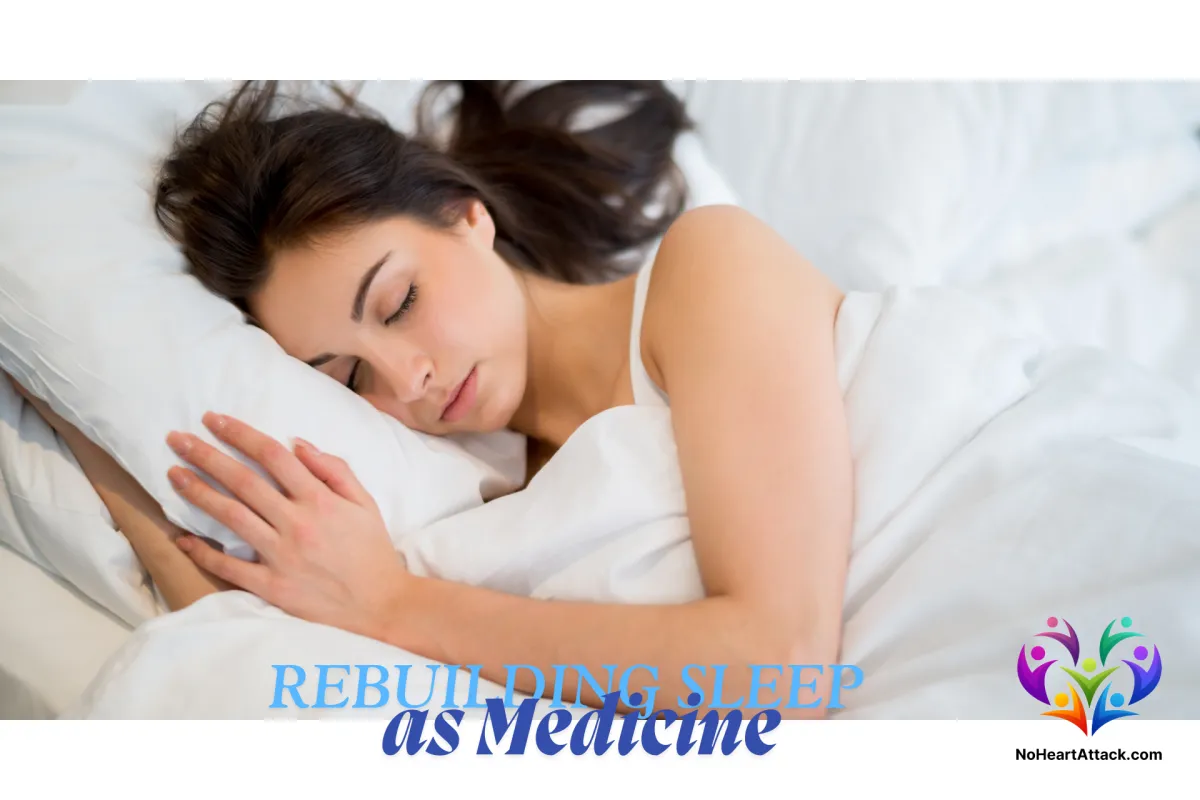
Why Sleep Is the Strongest Medicine for Cardiovascular Recovery | Healos™
Sleep: Where Real Repair Happens
After a heart event, stroke, or surgery, your body needs to heal—and its most profound work is done while you sleep. Deep and REM sleep don't just help you feel rested; they actively reduce inflammation, regulate blood pressure, restore your nervous system, and consolidate learning. In short, sleep is where you rebuild your strength and confidence for the day ahead.
Healos™ helps you reclaim your nights, transforming sleep from a frustrating struggle into a structured, trackable protocol that actively protects your heart and brain.
(See how all five pillars integrate in our Healos™ System Overview.)

Why Sleep Breaks Down During Recovery
If you find yourself dreading bedtime, you're not alone. The recovery journey can bring many factors that disrupt a good night's rest:
Night-time anxiety and the fear of a relapse.
An irregular routine, late caffeine, or a glass of wine.
Disrupted sleep cycles due to pain or medication timing.
An unrecognized sleep disorder like apnea, which can elevate blood pressure and stress hormones.
Healos™ provides the solution to these challenges.
🟢Free: Get gentle reminders to wind down for the evening, along with access to guided meditations and support from our community.
🔵Essential: Follow a personalized Sleep & Repair routine, receive custom reminders for checkups and apnea screening cues, and track trends on your dashboard.
🔴Premium: Our AI delivers micro-actions that adapt to your wearable and lab signals, plus you get Red Flag Alerts for persistent issues and 1-on-1 coach reviews.
The Sleep & Repair Framework (Simple, Safe, Effective)
This framework is a simple guide to help you build a routine that supports your body's natural healing process.
1. Prepare (60–120 minutes before bed)
Light: Dim your screens and lights, and switch all devices to night mode.
Fuel: If you're hungry, have a light, magnesium-rich evening snack (like yogurt with pumpkin seeds).
Caffeine & Alcohol: Avoid both for at least 6–8 hours before bed—they fragment sleep and can raise your blood pressure at night. Healos™ Support:
🟢Free: Get a gentle "Wind-down starts now" reminder and access a short, calming audio.
🔵Essential: Set custom reminders for medication timing and when to cut off hydration.
🔴Premium: Receive AI nudges ("Tonight: 10-min breathwork; yesterday's late caffeine noted") and enable caregiver pings if patterns persist.
2. Downshift (20–30 minutes)
Breathwork: Try a 4-7-8 or box breathing technique to help lower your heart rate.
Body Scan: Release tension in your neck and shoulders with gentle stretches.
Mind Quieting: Try journaling just three lines: a worry → a plan → and a moment of gratitude. Healos™ Support: Our Free meditation library is always there for you; Essential adds a "guided downshift" playlist; Premium adapts choices to your real-time HRV trends.
3. Sleep Hygiene Essentials
Bedroom: Keep your room cool (60–67°F / 15–19°C), dark, and quiet; consider using a white noise machine.
Consistency: Go to sleep and wake up at the same time every day—even on weekends.
Position: Try side-sleeping if you snore or suspect you have sleep apnea. Healos™ Support: Your Essential dashboard shows your adherence to your routine; Premium flags irregularities that might be affecting your BP or RCI.
Screen the "Hidden Disruptor": Sleep Apnea
Untreated obstructive sleep apnea is a hidden disruptor that can raise your blood pressure, strain your heart, and worsen your daytime fatigue. Please talk to your clinician about getting screened if you notice:
Loud snoring, gasping for air, or if your partner witnesses pauses in your breathing.
Waking up with a morning headache or dry mouth, or experiencing daytime sleepiness.
Hypertension that resists medication and lifestyle changes. Healos™ Support:
🟢Free: Get educational content and self-check prompts to raise your awareness.
🔵Essential: Receive reminders for your 3, 6, and 12-month checkups, along with a specific cue to discuss apnea screening.
🔴Premium: Our AI can detect if your sleep efficiency is low and your BP is consistently high, prompting you to discuss formal testing with your doctor. You can also enable optional caregiver notifications.
(See how data informs care in our Data-Driven Recovery Blog.)
Turn Data Into Better Sleep (Without Obsessing)
You don't have to track every number perfectly; just focus on the trends. Useful signals include your sleep duration, sleep efficiency, resting HR, HRV, and morning energy levels.
Healos™ RCI (Recovery Confidence Index): We combine your sleep, nutrition, exercise, and mood into a single, simple score from 0–100. Instead of worrying about data, you can see your progress—and build confidence—every single day.
🟢Free Plan: Get basic weekly sleep trend updates and reminders.
🔵Essential Plan: Access a full dashboard, custom checkups, and group Q&A.
🔴Premium Plan: Our AI delivers micro-actions ("Tonight: start your wind-down routine 30 mins earlier") and provides risk alerts integrated with your wearables and labs.

A Sample Evening Routine (Post-Clearance, Adaptable)
This is a gentle guide. Find what works best for you.
6:30 pm – Finish dinner; avoid alcohol and caffeine.
8:30 pm – Dim the lights; have a light snack if needed.
9:00 pm – Start a guided breathing exercise and a 10-minute stretch.
9:20 pm – Listen to a Healos™ meditation and journal 3 lines of gratitude.
9:45 pm – Put your devices away and make sure your bedroom is cool, dark, and quiet.
10:00 pm – Lights out; try side-sleeping if you suspect snoring is an issue.
(Explore the nutrition–sleep link in our Nutrition Recovery Blog.)
Red Flags: When to Pause & Call Your Care Team
Stop and call your doctor immediately if you experience:
New or worsening chest pain, pressure, or shortness of breath at night.
Frequent gasping, choking, or witnessed pauses in breathing.
Persistent insomnia with daytime sleepiness that affects your safety.
Nightmares or panic that don't improve with a downshift routine.
On the 🔴Premium plan, you can enable Red Flag Alerts: if your wearables or self-reported data cross a set threshold (e.g., very low sleep efficiency + high morning BP), Healos™ will prompt you to check in with your clinician and can notify a caregiver.
Real-Life Example: Elena's Night-to-Day Turnaround
Elena, a 61-year-old post-bypass patient, dreaded bedtime. She was plagued by racing thoughts, broken sleep, and morning headaches.
Weeks 1–2: She started with the Free plan, using the wind-down reminders and breathing exercises. Her sleep extended from ~5.5 hours to ~6.5 hours.
Month 2: She upgraded to Essential, and the personalized routine and checkup cues prompted her to get screened for apnea (which was later confirmed as mild OSA).
Month 3–4: She then moved to Premium, where the AI nudges aligned her meals and exercise timing for better rest. Her RCI rose from 56 to 78, her morning blood pressure stabilized, and her energy returned.
For Elena, sleep stopped being a fight—and became her strongest medicine.
From Restless Nights to Repairing Nights
Your recovery isn't powered by willpower alone—it's powered by a system. With Healos™, sleep becomes a reliable, repeatable protocol—supported by gentle reminders, personalized adjustments, risk awareness, and your community.
Ready to start repairing while you rest?
[Start our free 32-Dimension H-Index Health Audit Now →]
[Book a free consultation with a Healos™ coach →]

Disclaimer: Healos™ provides educational and self-management support and does not replace medical diagnosis or emergency care. Always follow your clinician's guidance.
