5 Numbers to Track After Heart Surgery or Stroke | Healos™
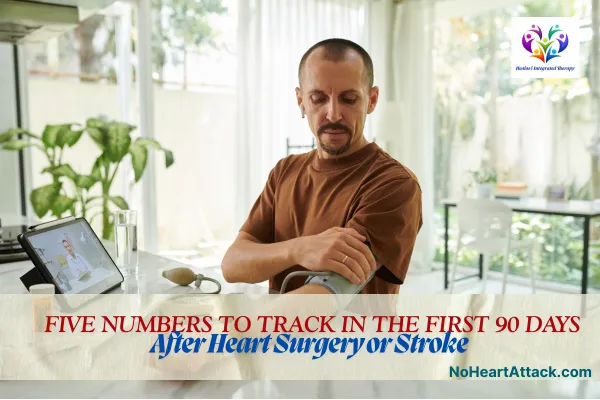
Five Numbers to Track in the First 90 Days After Heart Surgery or Stroke
In the weeks after heart surgery or a stroke, recovery is mostly measured in feelings: a good day, a tired day, a scary moment on the stairs, a night of bad sleep. Feelings matter, but they're a noisy signal. They swing with the weather, the medication schedule and the news.
Numbers are steadier, and a small number of them tell you far more about how recovery is really going than any single good or bad day.
Here is the short answer. In the first 90 days after heart surgery or a stroke, five numbers give the clearest picture of recovery: home blood pressure, LDL cholesterol, body weight, daily steps and a mood score. Each is simple to measure, each is linked to future risk, and together they tell you and your care team whether recovery is on track, often before symptoms would.
简短的答案: 心脏手术或卒中后的几周,康复大多用感受来衡量:好的一天、累的一天、爬楼梯时害怕的一刻、睡不好的一夜。感受很重要,但它是嘈杂的信号,会随天气、服药时间和新闻起伏。数字更稳定,其中少数几个比任何一天的好坏都更能说明康复的真实情况。头 90 天里,五个数字最能清楚反映康复:家庭血压、LDL 胆固醇、体重、每日步数和情绪评分;每一个都容易测量、都与未来风险相关,合在一起能让你和团队知道康复是否在正轨上,常常比症状更早。
Number 1: Home blood pressure
Why it matters. Blood pressure is the single most powerful modifiable risk factor for stroke and heart disease. In a meta-analysis of 123 trials, every 10 mmHg reduction in systolic pressure lowered stroke by about 27% and major cardiovascular events by about 20% (Ettehad et al., Lancet, 2016).
Target. Many guidelines aim for below about 130/80 after a stroke or with established heart disease, but your team sets your personal target (see blood pressure after a stroke).
How to measure. A validated upper-arm cuff; sit quietly for five minutes, feet flat, arm supported at heart level; no coffee or exercise in the previous 30 minutes. Two readings a minute apart, morning and evening, for several days before appointments.
When to call. Readings well above target on several days, very low readings with dizziness or fainting, or a very high reading with severe headache, chest pain, weakness or vision changes, which is an emergency.
数字 1:家庭血压:
为什么重要:血压是卒中和心脏病最有力的可改变风险因素,123 项试验的荟萃分析中,收缩压每降 10 mmHg,卒中减少约 27%、主要心血管事件减少约 20%(Lancet 2016)。
目标:卒中后或已有心脏病者,很多指南目标约低于 130/80,个人目标由团队设定。
怎么测:用经过验证的上臂式血压计,安静坐 5 分钟、双脚平放、手臂与心脏同高,前 30 分钟不喝咖啡不运动,间隔一分钟测两次,复诊前连续几天早晚各测。
何时联系:连续几天明显高于目标;很低并伴头晕或晕厥;很高并伴剧烈头痛、胸痛、无力或视力变化——后者是急症。
Number 2: LDL cholesterol
Why it matters. LDL keeps building plaque after the stent, bypass or stroke treatment is done. After atherosclerotic ischaemic stroke, the Treat Stroke to Target trial found that aiming for LDL below 1.8 mmol/L reduced major cardiovascular events to 8.5%, compared with 10.9% at a higher target (Amarenco et al., NEJM, 2020). Canadian guidelines use the same threshold after a heart attack.
How often. Usually 4 to 12 weeks after a statin is started or changed, then periodically. Make sure it's ordered and that you see the result.
When to act. If LDL is above target, ask about the dose or added medicines; if you've stopped a statin because of side effects, tell your team (see statins for life).
数字 2:LDL 胆固醇: 为什么重要:支架、搭桥或卒中治疗完成后,LDL 仍在继续形成斑块;动脉粥样硬化性缺血性卒中后,Treat Stroke to Target 试验发现以 LDL 低于 1.8 mmol/L 为目标,主要心血管事件为 8.5%,较高目标组为 10.9%(NEJM 2020),加拿大指南心梗后采用同一阈值。多久查一次:开始或调整他汀后 4–12 周,之后定期复查,确保医生开了这项检查并且你看到了结果。何时行动:高于目标就问是否调整剂量或加药;如果因副作用停了他汀,请告诉团队。
Number 3: Body weight
Why it matters. In the first weeks, weight is less about fat and more about fluid. A rapid gain can be the earliest sign of fluid build-up, particularly with heart failure, weak heart pumping or kidney problems, often days before breathlessness or ankle swelling. Gradual unplanned weight loss can signal poor appetite and muscle loss.
How to measure. Same scale, same time (morning, after the toilet, before breakfast), similar clothing; daily if you have heart failure or your team asks.
When to call. A gain of more than about 2 kg (4–5 lb) over two to three days, or the figure your team gives you, especially with new swelling or breathlessness lying flat. Mention steady unplanned weight loss too.
数字 3:体重:
为什么重要:最初几周,体重更多反映的是液体而不是脂肪;体重快速增加可能是液体潴留的最早信号,尤其在心衰、心脏泵血弱或肾脏有问题时,常比气短或脚踝水肿早几天出现;不明原因的缓慢下降则可能提示食欲差和肌肉流失。
怎么测:同一台秤、同一时间(早上如厕后、早餐前)、相似衣着;有心衰或团队要求时每天测。
何时联系:2–3 天内增加约 2 公斤以上(或团队给你的数字),尤其伴新发水肿或平躺时气短;体重持续下降也要告知。
Number 4: Daily steps or active minutes
Why it matters. Movement is the backbone of cardiac and stroke recovery, and step counts show whether it's actually happening. In a meta-analysis of 15 cohorts, more daily steps were linked with lower mortality, and for adults aged 60 and over the benefit levelled off at around 6,000 to 8,000 steps a day (Paluch et al., Lancet Public Health, 2022).
How to track. A phone or simple step counter. Early targets may be much lower and should be set with your rehab team, especially after a stroke with balance problems.
What to watch. A steady upward trend is the goal. A sustained drop, especially with low mood or poor sleep, is worth mentioning (see why you may still feel unwell).
数字 4:每日步数或活动分钟:
为什么重要:活动是心脏和卒中康复的支柱,步数能显示它是否真的在发生;15 项队列的荟萃分析中,每日步数越多死亡率越低,60 岁及以上成人的获益在每天约 6,000–8,000 步时趋于平稳(Lancet Public Health 2022)。
怎么记录:手机或简单计步器即可;早期目标可能低得多,应与康复团队一起设定,尤其卒中后有平衡问题时。
留意什么:目标是稳步上升的趋势;持续下降、尤其伴情绪低落或睡眠差时,值得告诉团队。
Number 5: A mood score
Why it matters. Mood is the number most people never write down, and the one most likely to quietly derail everything else. About 31% of stroke survivors experience depression (Hackett & Pickles, International Journal of Stroke, 2014), and roughly one in five heart attack survivors meets criteria for major depression (Thombs et al., Journal of General Internal Medicine, 2006). In the Healos framework, mood acts as a multiplier on every other part of recovery.
How to track. The PHQ-2 asks two questions about the past two weeks: how often you've had little interest or pleasure in doing things, and how often you've felt down, depressed or hopeless. Each is scored 0 to 3; a total of 3 or more is a reason to talk to your doctor (see depression screening after a heart attack).
When to call. Any thoughts of self-harm: call or text 988 in Canada or the US, now.
数字 5:情绪评分: 为什么重要:情绪是大多数人从不记录的数字,也最可能悄悄拖垮其他一切;约 31% 的卒中幸存者经历抑郁(2014),约五分之一的心梗幸存者符合重度抑郁标准(2006);在 Healos 框架模型中,情绪是康复其他一切的乘数。怎么记录:PHQ-2 询问过去两周的两个问题——做事缺乏兴趣或乐趣的频率、感到低落、抑郁或绝望的频率,每题 0–3 分,总分 3 分及以上就该和医生谈谈。何时联系:任何自伤念头,请立即在加拿大或美国拨打或发短信至 988。
Putting the five numbers together
Keep the five numbers on one page, on the fridge, in a notebook or a phone note, and bring them to every appointment. Trends matter more than single readings: three weeks of rising blood pressure, a weight jump over a weekend or a mood score creeping up tell your team far more than any one day. These numbers also reflect the everyday factors, from sleep and food to stress and activity, that feed the shared root of heart and brain disease (see one inflammation, three hearts).
把五个数字放在一起: 把五个数字记在一页纸上——贴在冰箱上、写在本子里或手机备忘录中——每次复诊都带上。趋势比单次读数更重要:连续三周上升的血压、一个周末体重的跃升、慢慢升高的情绪评分,比任何一天的数值都更能说明问题。这些数字也反映了睡眠、饮食、压力和活动等日常因素,而它们正是心脑疾病共同根源的推动者。
How Healos™ supports the first 90 days
The 91-Day Protocol is built around exactly this window. It moves through Detox, Replenish and Repair, providing complementary cellular nutrition matched to your medication list, with follow-ups at day 30 and day 60 (with a reminder to book your blood test) and a blood-test report review at day 90 that bring your five numbers together into a summary for your care team. Sovereign Monthly · Recovery continues the support month to month.
Healos™ 如何支持头 90 天: 91 天方案正是围绕这个窗口设计的:依次经过排毒、补给、修复,提供与用药清单匹配的辅助细胞级营养,第 30 天跟进、第 60 天跟进并提醒验血、第 90 天验血报告解读,把五个数字整理成给医疗团队的摘要;Sovereign Monthly · Recovery 按月延续支持。
The bottom line
Feelings swing; numbers show the trend. Track home blood pressure, LDL, weight, daily steps and a simple mood score for the first 90 days, keep them on one page and bring them to every appointment. They'll tell you, and your team, whether recovery is on track, and when it's time to call.
结论: 感受会起伏,数字显示趋势。头 90 天记录家庭血压、LDL、体重、每日步数和一个简单的情绪评分,集中在一页纸上,每次复诊都带上。它们会告诉你和团队,康复是否在正轨上,以及什么时候该打电话。
Frequently asked questions
What should I track after heart surgery or a stroke? Five numbers give the clearest picture in the first 90 days: home blood pressure, LDL cholesterol, body weight, daily steps and a mood score such as the PHQ-2.
How often should I check my blood pressure after a stroke? Commonly twice in the morning and twice in the evening for several days before appointments, or as your team advises, using a validated upper-arm cuff after five minutes of quiet rest.
How much weight gain is a warning sign after heart surgery? A common threshold is more than about 2 kg (4–5 lb) over two to three days, or the figure your team gives you, especially with new swelling or breathlessness. It can signal fluid build-up.
How many steps a day should I aim for after a heart attack? Start with the target your rehab team sets and build gradually. For adults over 60, the mortality benefit of steps levelled off at around 6,000 to 8,000 a day in a large meta-analysis.
常见问题:
1. 术后要记录什么?头 90 天五个数字:家庭血压、LDL、体重、每日步数和情绪评分(如 PHQ-2)。
中风后多久测一次血压?复诊前几天早晚各测两次,或按团队建议,用上臂式血压计、安静坐 5 分钟后测。
体重增加多少要警惕?2–3 天内增加约 2 公斤以上(或团队给的数字),尤其伴新发水肿或气短,可能是液体潴留。
每天走多少步?从康复团队设定的目标开始逐步增加,60 岁以上约 6,000–8,000 步后获益趋于平稳。
References
Ettehad D, et al. Blood pressure lowering for prevention of cardiovascular disease and death: a systematic review and meta-analysis. Lancet. 2016;387(10022):957–967.
Amarenco P, et al. A comparison of two LDL cholesterol targets after ischemic stroke (Treat Stroke to Target). New England Journal of Medicine. 2020;382:9–19.
Paluch AE, et al. Daily steps and all-cause mortality: a meta-analysis of 15 international cohorts. Lancet Public Health. 2022;7(3):e219–e228.
Hackett ML, Pickles K. Part I: frequency of depression after stroke. International Journal of Stroke. 2014;9(8):1017–1025.
Thombs BD, et al. Prevalence of depression in survivors of acute myocardial infarction. Journal of General Internal Medicine. 2006;21(1):30–38.