Statins for Life After a Heart Attack? The Science Behind LDL Under 1.8 | Healos™
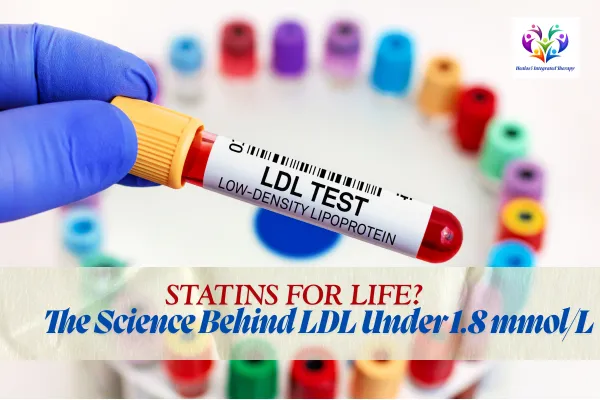
Statins for Life? The Science Behind LDL Under 1.8 mmol
It's one of the first questions people ask after a heart attack, usually while looking at the new pill organiser on the kitchen counter: "Do I have to take this forever?"
It's a fair question. Nobody likes the idea of a lifelong prescription, especially one they've heard alarming things about from friends, relatives or the internet.
Here is the short answer. For most people who have had a heart attack, stent or bypass, statins are long-term therapy because atherosclerosis is lifelong. Every 1 mmol/L drop in LDL cholesterol lowers major vascular events by about a fifth, and Canadian guidelines add treatment when LDL stays at or above 1.8 mmol/L. If statins cause side effects, switching, adjusting or adding other medicines usually works better than stopping.
简短的答案: 这是心梗后人们最先问的问题之一,通常是看着厨房台面上新的分格药盒时:「这个要吃一辈子吗?」这是个合理的问题,没人喜欢终身服药,尤其是从亲友或网上听过可怕说法的药。对大多数经历过心梗、支架或搭桥的人来说,他汀是长期治疗,因为动脉粥样硬化是终身过程;LDL 每降 1 mmol/L,主要血管事件约减少五分之一,加拿大指南建议 LDL 持续在 1.8 mmol/L 或以上时加强治疗;如果他汀引起副作用,换药、调整或加药通常比停药更好。
Why statins are usually for life after a heart attack
A heart attack is the visible moment in a process that took years to build (see the 10-year cellular timeline). A stent or bypass treats one or two narrowed segments, but LDL cholesterol keeps delivering fat into artery walls everywhere, every day, for as long as it circulates at high levels.
Statins lower that supply and help stabilise existing plaque, making it less likely to rupture; several statins also reduce inflammation. Those benefits last only as long as you take the medicine. Stop, and LDL returns to its previous level within weeks.
The strongest evidence comes from the Cholesterol Treatment Trialists' Collaboration: each 1.0 mmol/L reduction in LDL reduced major vascular events by about 22% (Lancet, 2010), and the benefit grows the longer treatment continues. That's why cardiologists see statins less as a course of treatment and more as a long-term foundation, like a seatbelt you wear on every trip.
为什么心梗后他汀通常要长期服用: 心梗是一个积累了多年的过程中可见的那一刻。支架或搭桥处理的是一两段狭窄,而只要 LDL 在高水平循环,它就每天把脂肪送进全身各处的动脉壁。他汀减少这种供给,并帮助稳定已有斑块、降低破裂风险,几种他汀还能降低炎症;这些获益只在服药期间存在,一旦停药,LDL 几周内就回到原来水平。最有力的证据来自胆固醇治疗试验者协作组:LDL 每降低 1.0 mmol/L,主要血管事件减少约 22%(Lancet 2010),而且治疗越久获益越大。所以心脏科医生把他汀看作长期基础,就像每次出行都要系的安全带。
Where does the LDL target of 1.8 mmol/L come from?
For people who already have atherosclerotic cardiovascular disease, including anyone who has had a heart attack, stent or bypass, the 2021 Canadian Cardiovascular Society guidelines recommend a high-intensity statin and adding further therapy if LDL remains at 1.8 mmol/L or higher (Pearson et al., Canadian Journal of Cardiology, 2021). Equivalent thresholds use non-HDL cholesterol (2.4 mmol/L) or ApoB (0.7 g/L).
Why 1.8? Large trials show that pushing LDL lower keeps reducing events, with no obvious floor. The threshold marks the point where evidence clearly favours adding treatment for people at high risk. Two practical points follow: know your own number and your cardiologist's target, and remember that a "normal" result on a standard lab report may still be too high for someone with heart disease (see 5 numbers to track).
LDL 目标 1.8 mmol/L 从何而来: 对已有动脉粥样硬化性心血管病的人(包括心梗、支架或搭桥后),2021 年加拿大心血管学会指南建议使用高强度他汀,并在 LDL 仍在 1.8 mmol/L 或以上时加用其他治疗(Can J Cardiol 2021);等效阈值为非 HDL 2.4 mmol/L 或 ApoB 0.7 g/L。为什么是 1.8?大型试验显示 LDL 越低事件越少,没有明显的下限;这个阈值标志着证据明确支持高风险人群加强治疗的点。两个实际要点:知道自己的数字和心脏科医生给你的目标;化验单上的「正常」对心脏病患者来说可能仍然太高。
What happens if you stop taking statins?
Stopping is common. In Ontario, only about 40% of older adults were still taking a statin two years after an acute coronary syndrome (Jackevicius et al., JAMA, 2002). Most people don't decide to stop; a prescription runs out, a muscle ache gets blamed on the pill, or the medicine stops feeling necessary once there are no symptoms.
The consequences aren't immediate, which is exactly what makes them easy to underestimate. LDL rises back within weeks, plaque stabilisation fades, and studies consistently link stopping after a heart attack with more repeat events and deaths. If you're thinking about stopping, or already have, talk to your doctor or pharmacist; there's almost always a better option.
停用他汀会怎样: 停药很常见:在安大略,急性冠脉综合征两年后,只有约 40% 的老年人仍在服用他汀(JAMA 2002)。大多数人并不是刻意停药,而是处方用完了、把肌肉酸痛归咎于药,或者没有症状后觉得不需要了。后果不会马上出现,这正是它容易被低估的原因:LDL 几周内回升,斑块稳定作用消退,研究一致显示心梗后停药与更多再发事件和死亡相关。如果你在考虑停药或已经停了,请和医生或药剂师谈谈,几乎总有更好的选择。
Are statin side effects real? The surprising answer
Yes, and also, often, no. Genuine side effects exist: muscle symptoms are the most common, and a small number of people have more serious problems. Statins also lower the body's own production of CoQ10 (see statins and CoQ10).
But the British SAMSON trial showed how much of the story is expectation. People who had stopped statins because of side effects took, in random order, months of a statin, months of an identical placebo and months of no tablets, without knowing which was which. About 90% of the symptom burden they reported on statins also appeared on placebo (Wood et al., NEJM, 2020). This is the nocebo effect: the symptoms are real, but the cause often isn't the drug. Many participants restarted their statins after seeing their own results.
他汀的副作用是真的吗:一个出人意料的答案: 是真的,但往往又不是。真实的副作用确实存在:肌肉症状最常见,少数人会出现更严重的问题;他汀也会减少身体自身合成的 CoQ10。但英国 SAMSON 试验显示,预期在其中占了多大比重:因副作用停用他汀的人,在不知情的情况下按随机顺序分别服用几个月他汀、几个月外观相同的安慰剂、几个月不服药,结果他们在他汀期间报告的症状负担,约 90% 在安慰剂期间同样出现(NEJM 2020)。这就是反安慰剂效应:症状是真实的,但原因往往不是药物。很多参与者看到自己的结果后重新开始服用他汀。
Options when statins don't agree with you
If a statin causes symptoms, your care team has a ladder of options that usually keeps you protected:
Change the statin or the dose. Many people who can't tolerate one do fine on another, or on a lower dose.
Change the schedule. Some long-acting statins can be taken every other day or a few times a week under supervision.
Add ezetimibe, which reduces cholesterol absorption and can be combined with a lower statin dose.
Consider a PCSK9 inhibitor, an injection every two or four weeks that lowers LDL substantially.
Consider bempedoic acid, which reduced major cardiovascular events by 13% in statin-intolerant patients in CLEAR Outcomes (Nissen et al., NEJM, 2023).
Which fits depends on your LDL, other conditions, coverage and preferences. "Statins don't agree with me" is the start of a conversation, not the end of your cholesterol treatment.
他汀不耐受时的选择: 如果他汀引起症状,医疗团队有一个通常能让你继续受保护的选择阶梯:
1. 换一种他汀或调整剂量——很多人不耐受一种,换另一种或减量就没问题;
2. 调整服用方式——部分长效他汀可在监督下隔天或每周几次服用;
3. 加用依折麦布——减少胆固醇吸收,可与较低剂量他汀联用;
4. 考虑 PCSK9 抑制剂——每两或四周注射一次,能大幅降低 LDL;
5. 考虑贝派地酸——在 CLEAR Outcomes 试验中使他汀不耐受患者主要心血管事件减少 13%(NEJM 2023)。
选哪个取决于你的 LDL、其他疾病、报销和偏好。「他汀不适合我」是对话的开始,而不是降胆固醇治疗的结束。
Five questions to bring to your next appointment
What is my current LDL, and what target are we aiming for?
Am I on the right statin and dose for my level of risk?
If my LDL is still at or above 1.8 mmol/L, should we add another medicine?
Could my muscle aches or fatigue be caused by something else, such as low vitamin D, thyroid problems or another medicine?
Should my lipoprotein(a) be checked? Canadian guidelines recommend measuring it once in adulthood.
下次复诊可以问的五个问题:
1. 我现在的 LDL 是多少,目标是多少?
2. 以我的风险水平,现在的他汀和剂量合适吗?
3. 如果 LDL 仍在 1.8 mmol/L 或以上,要不要加药?
4. 我的肌肉酸痛或疲劳会不会是别的原因,比如维生素 D 偏低、甲状腺问题或其他药物?
5. 需要查脂蛋白(a) 吗?加拿大指南建议成年后测一次。
How Healos™ supports people on long-term statins
Healos™ works alongside your statin, never instead of it. The 91-Day Protocol moves through Detox, Replenish and Repair; the Replenish stage restores nutrients that statins and other heart medicines commonly use up, such as CoQ10, matched to your medication list. Follow-ups at day 30 and day 60 (with a reminder to book your blood test) and a blood-test report review at day 90 keep your LDL and symptoms in view, so concerns reach your cardiologist instead of turning into a quiet decision to stop. Sovereign Monthly · Recovery continues month to month.
Healos™ 如何支持长期服用他汀的人: Healos™ 与他汀并行,绝不替代它。91 天方案依次经过排毒、补给、修复,其中补给阶段按你的用药清单补回他汀等心脏药物常消耗的营养素,例如 CoQ10。第 30 天跟进、第 60 天跟进并提醒验血、第 90 天验血报告解读,让 LDL 和症状始终可见,使顾虑传达给心脏科医生,而不是变成悄悄停药的决定;Sovereign Monthly · Recovery 按月延续。
The bottom line
For most people with heart disease, statins are a long-term foundation, and the benefit grows the longer you stay on them. The target is clear: LDL under 1.8 mmol/L, with more treatment if you're above it. If statins don't seem to agree with you, don't quietly stop. Investigate, adjust and explore the alternatives with your team; there's almost always a way to stay protected.
结论: 对大多数心脏病患者来说,他汀是长期的基础,坚持越久获益越大。目标很清楚:LDL 低于 1.8 mmol/L,高于这个值就加强治疗。如果觉得他汀不适合自己,不要悄悄停药;和团队一起排查、调整、探索替代方案,几乎总有办法让你继续受到保护。
Frequently asked questions
Do I need to take statins for life after a heart attack? For most people, yes. Atherosclerosis is lifelong, statin benefits last only while you take them, and protection grows the longer treatment continues. Never stop without discussing it with your doctor.
What should my LDL cholesterol be after a heart attack or stent? Canadian guidelines recommend adding further therapy when LDL stays at 1.8 mmol/L or higher after a heart attack, stent or bypass. Ask your cardiologist what target applies to you.
What happens if I stop taking statins? LDL returns to its previous level within weeks and the long-term protection is lost. Stopping after a heart attack has been linked with more repeat events. If side effects are the problem, ask about alternatives.
Are statin side effects real? Some are, but in the SAMSON trial about 90% of the symptoms people reported on statins also appeared on placebo. Symptoms are worth investigating, because many people who think they can't take statins actually can.
常见问题:
心梗后他汀要吃一辈子吗?对大多数人是的,动脉粥样硬化是终身过程,获益只在服药期间存在,切勿自行停药。
心梗或支架后 LDL 应该多少?加拿大指南建议 LDL 持续 ≥1.8 mmol/L 时加强治疗,具体目标问心脏科医生。
停用他汀会怎样?LDL 几周内回升,长期保护丧失,与更多再发事件相关,有副作用请询问替代方案。
他汀副作用是真的吗?有些是,但 SAMSON 试验中约 90% 的症状在安慰剂期间同样出现,值得仔细排查。
References
Cholesterol Treatment Trialists' (CTT) Collaboration. Efficacy and safety of more intensive lowering of LDL cholesterol: a meta-analysis of data from 170 000 participants in 26 randomised trials. Lancet. 2010;376(9753):1670–1681.
Pearson GJ, et al. 2021 Canadian Cardiovascular Society Guidelines for the Management of Dyslipidemia. Canadian Journal of Cardiology. 2021;37(8):1129–1150.
Wood FA, et al. N-of-1 trial of a statin, placebo, or no treatment to assess side effects (SAMSON). New England Journal of Medicine. 2020;383:2182–2184.
Jackevicius CA, Mamdani M, Tu JV. Adherence with statin therapy in elderly patients with and without acute coronary syndromes. JAMA. 2002;288(4):462–467.
Nissen SE, et al. Bempedoic acid and cardiovascular outcomes in statin-intolerant patients (CLEAR Outcomes). New England Journal of Medicine. 2023;388:1353–1364.