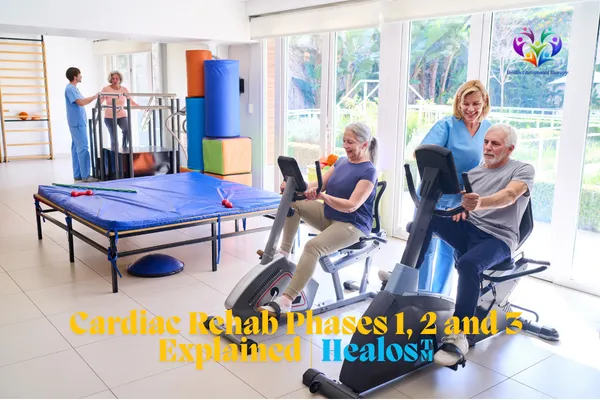
Cardiac Rehab Phases 1, 2 and 3 Explained | Healos™
Cardiac Rehab Phases 1, 2 and 3: What Each Involves and How to Get In
If you've had a heart attack, a stent, bypass or valve surgery, there's a treatment that lowers your risk of dying from heart disease, cuts hospital readmissions and improves how you feel, with almost no side effects. It's called cardiac rehabilitation, and most people who qualify never go.
Here is the short answer. Cardiac rehab has three phases: phase 1 starts in hospital, phase 2 is a supervised outpatient programme of exercise, education and risk-factor support lasting several weeks, and phase 3 is lifelong maintenance. It reduces cardiovascular death by about a quarter and hospital admissions too, yet only about one in four eligible US adults attends. Ask for a referral before you leave hospital.
简短的答案: 如果你经历过心梗、放支架、搭桥或瓣膜手术,有一种治疗能降低心脏病死亡风险、减少再住院、改善感受,而且几乎没有副作用——它叫心脏康复,但大多数符合条件的人从未参加。
心脏康复分三个阶段:第一阶段在住院期间开始;第二阶段是持续数周、有监督的门诊项目,包括运动、教育和风险因素管理;第三阶段是终身维持。它使心血管死亡减少约四分之一、住院也减少,但美国只有约四分之一的合格成人参加。出院前就请要求转诊。
Why cardiac rehab matters
Cardiac rehab isn't just exercise; it's a structured programme combining supervised exercise, education about medications and risk factors, nutrition guidance and psychological support. The evidence is strong. In a Cochrane review, exercise-based cardiac rehab reduced cardiovascular death by about 26%, heart attacks by about 18% and all-cause hospital admissions by about 23% (Dibben et al., Cochrane Database of Systematic Reviews, 2021).
Yet only about 24% of eligible US Medicare beneficiaries attend (Ritchey et al., 2020), and participation in Canada is also well below where it should be. Women, older adults, people in rural areas and those without a referral are least likely to go.
为什么心脏康复很重要: 心脏康复不只是运动,而是结合有监督运动、药物与风险因素教育、营养指导和心理支持的结构化项目。证据很强:Cochrane 综述中,以运动为基础的心脏康复使心血管死亡减少约 26%、心梗减少约 18%、全因住院减少约 23%(2021)。
但美国只有约 24% 的合格联邦医保受益人参加(2020),加拿大的参与率也远低于应有水平;女性、老年人、农村居民和没有被转诊的人最少参加。
The three phases of cardiac rehab
Phase 1: in hospital. Starts within days of your event or surgery. Nurses and physiotherapists get you sitting, standing and walking, check how your heart responds and teach the basics: medications, warning signs, wound care and what to expect at home.
Phase 2: supervised outpatient programme. Usually starts a few weeks after discharge and runs for several weeks to a few months. You attend sessions, often two or three times a week, that combine monitored exercise with education on medications, nutrition, stress, sleep and smoking, plus psychological support. In the US, Medicare covers up to 36 sessions. In Canada, hospital-based programmes are publicly funded, and length and format vary by province and programme.
Phase 3: lifelong maintenance. After the supervised programme ends, the goal is to keep going independently: regular exercise, risk-factor control and follow-up. Some communities offer maintenance classes; many people continue at home or at a gym. This is the phase where most people slip (see after cardiac rehab ends).
心脏康复的三个阶段:
第一阶段,住院期间:在事件或手术后几天内开始,护士和物理治疗师帮你坐起、站立和行走,观察心脏反应,并讲解基础知识:药物、警示信号、伤口护理和回家后的预期。
第二阶段,有监督的门诊项目:通常出院后几周开始,持续数周到几个月,常每周两三次,结合监护下的运动与药物、营养、压力、睡眠和戒烟教育以及心理支持;美国联邦医保最多覆盖 36 次,加拿大医院项目由公费资助,时长和形式因省份和项目而异。
第三阶段,终身维持:有监督的项目结束后,目标是独立坚持规律运动、控制风险因素和随访;有的社区提供维持课程,很多人在家或健身房继续——这也是大多数人掉队的阶段。
How to get into cardiac rehab
Ask before you leave hospital: "Have I been referred to cardiac rehab?" A referral at discharge is one of the strongest predictors of attending.
If you weren't referred, ask your cardiologist or family doctor. Some programmes also accept self-referral; it's worth calling your local programme.
Ask about formats. Home-based and virtual programmes produced similar improvements in outcomes to centre-based programmes in a Cochrane review (Anderson et al., Cochrane Database of Systematic Reviews, 2017), which helps if you live far away or work.
Ask about timing. It's not too late if months have passed; many programmes accept people well after their event.
Bring a family member to education sessions if you can; they'll be cooking, encouraging and remembering too.
如何获得心脏康复: 出院前就问:
「我被转诊到心脏康复了吗?」出院时转诊是是否参加最强的预测因素之一;
如果没有被转诊,请问心脏科或家庭医生,有些项目也接受自我转诊,值得给当地项目打个电话;
询问形式:Cochrane 综述中居家和线上康复的结局改善与中心康复相近(2017),对住得远或在工作的人很有帮助;
询问时间:即使已过去几个月也不晚,很多项目接收事件后较久的人;
可能的话带家人参加教育课,因为做饭、鼓励和记事的也是他们。
Common reasons people skip cardiac rehab, and what helps
"I feel fine now." Rehab isn't only about symptoms; its biggest benefits are fewer deaths, heart attacks and readmissions over the following years.
Work or caregiving. Ask about evening sessions, shorter programmes or home-based and virtual formats.
Distance or transport. Virtual programmes and community-based options exist in many regions; ask the programme what's available near you.
"It's for older people." Rehab is for anyone after a heart event, from their thirties to their nineties, and sessions are tailored to your fitness.
Fear of exercising. Supervised sessions are exactly the safe place to rebuild confidence, especially if fear is holding you back (see heart attack PTSD).
Nobody mentioned it. Many people simply weren't referred. Ask; it's your right to know.
人们为什么不去心脏康复,以及有什么办法:
「我现在感觉很好」——康复不只关乎症状,它最大的获益是此后几年更少的死亡、心梗和再住院;
工作或照护家人——询问晚间课程、较短的项目或居家和线上形式;
距离或交通——很多地区有线上和社区形式,问问项目附近有什么;
「那是给老年人的」——康复适合任何经历过心脏事件的人,从三十多岁到九十多岁,课程会按你的体能调整;
害怕运动——有监督的课程正是重建信心的安全场所,尤其当恐惧拖住你时;
没人提过——很多人只是没被转诊,请主动询问,这是你的权利。
What to expect in phase 2
An initial assessment: history, medications, sometimes an exercise test, and goals.
Monitored exercise: walking or cycling plus light strength work, with heart rate, blood pressure and symptoms checked (see strength training after a heart attack).
Education sessions: medications, nutrition, sleep, stress, returning to work, sex and driving.
Emotional support: screening for depression and anxiety, and someone to talk to.
A plan for afterwards: what to keep doing when the programme ends.
第二阶段会做什么:
初始评估:病史、用药,有时做运动试验,并设定目标;
监护下的运动:步行或骑车加轻度力量训练,同时监测心率、血压和症状;
教育课程:药物、营养、睡眠、压力、复工、性生活和驾驶;
情绪支持:筛查抑郁和焦虑,并有人可以倾诉;
之后的计划:项目结束后要继续做什么。
How Healos™ supports recovery
Cardiac rehab is the gold standard, and Healos is designed to work alongside it and especially after it, in phase 3, when most people lose momentum. The 91-Day Protocol moves through Clear, Replenish and Repair, three sequenced stages of complementary cellular nutrition and lifestyle support matched to your medication list, with check-ins at days 30, 60 and 91. Sovereign Monthly · Recovery continues that support month to month. If you haven't been to cardiac rehab yet, go; Healos™ doesn't replace it.
Healos™ 如何支持康复: 心脏康复是金标准,Healos 的设计是与它并行,尤其在大多数人失去动力的第三阶段接力。91 天方案依次经过减负、补给、修复,提供与用药清单匹配的辅助细胞级营养与生活方式支持,并在第 30、60、91 天评估;Sovereign Monthly · Recovery 按月延续支持。如果你还没参加过心脏康复,请先去,Healos™ 不能替代它。
The bottom line
Cardiac rehab is one of the most effective and most underused treatments in cardiology. Phase 1 starts in hospital, phase 2 builds fitness and knowledge with supervision, and phase 3 is the lifelong habit that keeps the benefits. Ask for a referral, choose a format that fits your life and plan now for what happens after the last session.
结论: 心脏康复是心脏病学中最有效、也最被低估的治疗之一。第一阶段在医院开始,第二阶段在监督下建立体能和知识,第三阶段是保住获益的终身习惯。要求转诊、选择适合你生活的形式,并从现在起为最后一次课程之后做好计划。
Frequently asked questions
What happens in each phase of cardiac rehab? Phase 1 starts in hospital with early mobility and education. Phase 2 is a supervised outpatient programme of exercise, education and support over several weeks. Phase 3 is lifelong maintenance on your own or in community programmes.
Is cardiac rehab worth it after a stent? Yes. In a Cochrane review, exercise-based cardiac rehab reduced cardiovascular death by about 26%, heart attacks by about 18% and hospital admissions by about 23%.
How do I get referred to cardiac rehab? Ask before discharge whether you've been referred. If not, ask your cardiologist or family doctor; some programmes also accept self-referral.
Can I do cardiac rehab at home? Many programmes offer home-based or virtual options, which produced similar improvements in outcomes to centre-based rehab in a Cochrane review.
常见问题:
心脏康复各阶段做什么?第一阶段住院时早期活动和教育;第二阶段数周的有监督门诊项目;第三阶段终身维持。
支架后值得参加吗?值得,Cochrane 综述中心血管死亡减少约 26%、心梗约 18%、住院约 23%。
怎么转诊?出院前问是否已转诊,没有就问心脏科或家庭医生,部分项目接受自我转诊。
能在家做吗?很多项目有居家或线上形式,效果与中心康复相近。
References
Dibben G, et al. Exercise-based cardiac rehabilitation for coronary heart disease. Cochrane Database of Systematic Reviews. 2021;11:CD001800.
Ritchey MD, et al. Tracking cardiac rehabilitation participation and completion among Medicare beneficiaries. Circulation: Cardiovascular Quality and Outcomes. 2020;13(1):e005902.
Anderson L, et al. Home-based versus centre-based cardiac rehabilitation. Cochrane Database of Systematic Reviews. 2017;6:CD007130.
Centers for Medicare & Medicaid Services. Cardiac rehabilitation programs: coverage of up to 36 sessions.