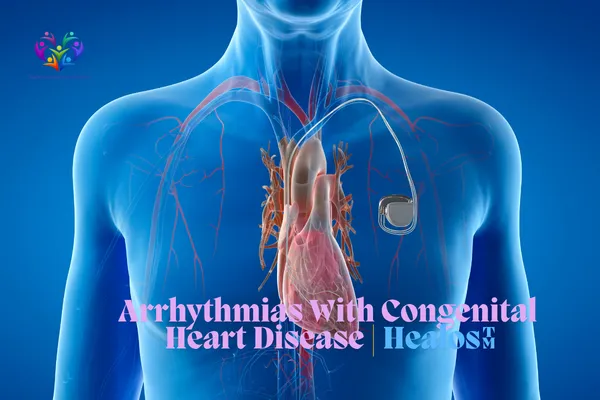
Arrhythmias With Congenital Heart Disease | Healos™
Arrhythmias With Congenital Heart Disease: Why Scars Cause Short Circuits
For many adults with a repaired congenital heart, the first sign that something has changed isn't breathlessness or fatigue; it's the heart itself, suddenly racing, fluttering or pounding in a way that feels different. It can be frightening, and it's very common.
Here is the short answer. Rhythm problems are the most common reason adults with congenital heart disease are admitted to hospital. Surgical scars and chambers stretched by years of extra pressure or volume create pathways where electrical signals can loop around, like a short circuit. About 15% of adults with congenital heart disease have an atrial arrhythmia, and the lifetime risk approaches half. Many are very treatable, so new palpitations deserve prompt attention.
Arrhythmias also connect to the shared root: inflammation and fibrosis in heart tissue make circuits easier to form, the same biology that links congenital hearts with heart attack recovery (see one inflammation, three hearts).
简短的答案: 对很多心脏修复过的先心病成人来说,变化的第一个信号不是气短或疲劳,而是心脏本身:突然以一种不同寻常的方式狂跳、扑动或重重地跳。这可能很吓人,也非常常见。心律问题是成人先心病住院最常见的原因:手术瘢痕和多年承受额外压力或容量而被拉伸的心腔,会形成让电信号绕圈的通路,就像短路;约 15% 的先心病成人有房性心律失常,终身风险接近一半;很多都能有效治疗,所以新出现的心悸值得及时处理。
心律失常也与共同根源相连:心肌组织中的炎症和纤维化让环路更容易形成,这正是把先天性心脏与心梗康复联系在一起的同一种生物学。
Why repaired hearts develop short circuits
The heart's rhythm depends on electrical signals travelling along orderly paths. Two things common after congenital heart repair disrupt that order:
Scars. Every incision and patch leaves scar tissue that doesn't conduct electricity. Signals can travel around the edge of a scar and loop back on themselves, a re-entrant circuit, producing a fast, regular rhythm such as intra-atrial re-entrant tachycardia, a form of atrial flutter.
Stretch. Chambers that have worked for years under extra pressure or volume, such as a dilated right atrium after a Fontan or a stretched right ventricle after tetralogy of Fallot repair, develop fibrosis and slow conduction that make circuits easier to form.
The risk tends to grow with age and time since surgery, which is why rhythm checks are part of lifelong ACHD follow-up (see growing older with congenital heart disease).
修复过的心脏为何会「短路」: 心脏节律依赖电信号沿有序的通路传导,而先心病修复后常见的两件事会打乱这种秩序:瘢痕——每一道切口和补片都会留下不导电的瘢痕组织,电信号可能沿瘢痕边缘绕行并回到原处,形成折返环路,产生快速而规整的心律,比如房内折返性心动过速(一种房扑);拉伸——多年在额外压力或容量下工作的心腔,比如 Fontan 术后扩大的右心房、法洛四联症修复后被拉伸的右心室,会出现纤维化和传导减慢,让环路更容易形成。风险往往随年龄和术后时间增加,所以心律检查是终身 ACHD 随访的一部分。
Which repairs carry most risk, and why it matters
Rhythm problems can follow almost any repair, even a simple atrial septal defect closure, but some carry more risk:
Fontan circulation, especially older types: atrial flutter is common and can quickly make the circulation less efficient.
Atrial switch operations (Mustard or Senning) for transposition: atrial arrhythmias and slow heart rhythms are frequent.
Tetralogy of Fallot: atrial arrhythmias, and in some people ventricular arrhythmias linked to the stretched right ventricle (see "I was fixed at age three").
Repairs near the conduction system, which can cause heart block and the need for a pacemaker.
It matters because these rhythms aren't just uncomfortable. In a large Quebec cohort, about 15% of adults with congenital heart disease had an atrial arrhythmia, with a lifetime risk of about 50%; atrial arrhythmias were linked to about 50% higher mortality, about twice the risk of heart failure or stroke, and three times the risk of needing a major cardiac intervention (Bouchardy et al., Circulation, 2009). Arrhythmias are the most frequent reason for hospital admission in this group (Khairy et al., Heart Rhythm, 2014).
哪些修复风险更高,以及为什么重要: 几乎任何修复后都可能出现心律问题,即使是简单的房间隔缺损封堵,但有些风险更高:Fontan 循环(尤其较早的术式)——房扑常见,并可能很快让循环效率下降;大动脉转位的心房调转术(Mustard 或 Senning)——房性心律失常和心率过慢常见;法洛四联症——房性心律失常,部分人还有与右心室扩张相关的室性心律失常;靠近传导系统的修复——可能引起传导阻滞,需要起搏器。重要的是,这些心律不只是让人不舒服:魁北克大型队列中,约 15% 的先心病成人有房性心律失常,终身风险约 50%;房性心律失常与死亡率高约 50%、心衰或卒中风险约翻倍、需要重大心脏干预的风险约三倍相关(Circulation 2009)。心律失常是这一群体住院最常见的原因(Heart Rhythm 2014)。
Warning signs, and when to act
Contact your ACHD team promptly for:
New palpitations, especially a fast, regular racing heartbeat that starts and stops suddenly or lasts more than a few minutes.
A drop in exercise tolerance, new breathlessness or tiredness, which can be the only sign of a slower, sustained arrhythmia, particularly with a Fontan circulation.
Light-headedness or near-fainting.
Call 911 for palpitations with fainting, chest pain, severe breathlessness or signs of stroke. Before an appointment, a heart rate reading or a smartwatch ECG recording during symptoms can help your team, but it doesn't replace assessment.
警示信号,以及何时行动: 出现以下情况请及时联系 ACHD 团队:新出现的心悸,尤其是突然开始和结束、或持续几分钟以上的快速规整心跳;运动耐量下降、新发气短或疲劳——这可能是较慢的持续性心律失常唯一的表现,Fontan 循环尤其如此;头晕或近乎晕厥。心悸伴晕厥、胸痛、严重气短或卒中征兆,请拨打 911。复诊前,症状发作时的心率读数或智能手表心电图记录能帮助团队,但不能替代评估。
Treatments that work
Rhythm problems in congenital heart disease are often very treatable, ideally in a centre with ACHD electrophysiology expertise:
Catheter ablation can map and break the circuit around a scar, and is often an effective long-term option.
Medicines to control rate or rhythm, chosen carefully because some suit repaired hearts better than others.
Anticoagulation to prevent stroke, which is recommended more readily in complex congenital disease than in the general population.
Pacemakers for slow rhythms or heart block, and implantable defibrillators (ICDs) for people at high risk of dangerous ventricular rhythms.
Treating the cause, such as replacing a leaking valve that has stretched a chamber.
有效的治疗: 先心病的心律问题往往可以有效治疗,最好在具备 ACHD 电生理专长的中心进行:射频消融可以标测并切断瘢痕周围的环路,常是有效的长期选择;控制心率或节律的药物需要谨慎选择,因为有些更适合修复过的心脏;抗凝预防卒中,在复杂先心病中比一般人群更积极推荐;起搏器用于心率过慢或传导阻滞,植入式除颤器(ICD)用于发生危险室性心律风险高的人;治疗原因,比如置换已撑大心腔的反流瓣膜。
ACHD special considerations
Many adults with a Fontan circulation or heart failure have a fluid limit, and dehydration or fluid shifts can trigger rhythm problems. Many take anticoagulants, which matter for any new medicine or supplement. Some supplements and herbal products, and high-dose stimulants such as energy drinks, can affect heart rhythm or anticoagulation, so check everything, including any nutrition plan such as Healos™, with your ACHD team and pharmacist first. Endocarditis prevention matters after device implantation. Cyanosis and pulmonary hypertension change which treatments are safe. Your ACHD team's guidance overrides any general advice, including ours.
ACHD 特别注意: 很多 Fontan 循环或心衰患者需要限制液体,脱水或液体波动可能诱发心律问题;很多人服用抗凝药,这关系到任何新药或补充剂;部分补充剂和草本产品,以及能量饮料等高剂量兴奋剂,会影响心律或抗凝,所以任何东西——包括 Healos™ 等营养方案——都要先与 ACHD 团队和药剂师核对;植入设备后需要预防心内膜炎;发绀和肺动脉高压会改变哪些治疗是安全的。你的 ACHD 团队的指导高于任何通用建议,包括我们的。
How Healos™ supports adults with congenital heart disease
Healos™ works on the shared root between ACHD visits, never on the rhythm itself, which is your electrophysiology team's domain. The 91-Day Protocol moves through Detox, Replenish and Repair, providing complementary cellular nutrition, with every kit pharmacist-reviewed against your medication list, including anticoagulants and rhythm medicines, before it ships. Follow-ups at day 30 and day 60 (with a reminder to book your blood test) and a blood-test report review at day 90 track energy, activity and symptoms. Sovereign Monthly · Protect continues month to month.
Healos™ 如何支持先心病成人: Healos™ 在 ACHD 复诊之间照顾共同根源,从不针对心律本身——那是电生理团队的领域。91 天方案依次经过排毒、补给、修复,提供辅助的细胞级营养,每份营养包发货前都由药剂师按你的用药清单(包括抗凝药和心律药物)审核;第 30 天跟进、第 60 天跟进并提醒验血、第 90 天验血报告解读,追踪精力、活动和症状;Sovereign Monthly · Protect 按月延续。
The bottom line
Scars and stretched chambers make rhythm problems common after congenital heart repair: about 15% of adults have an atrial arrhythmia and the lifetime risk approaches half. They matter, because they're linked to heart failure, stroke and higher mortality, but many are very treatable. Report new palpitations or a drop in stamina promptly, call 911 for fainting or chest pain, and keep rhythm checks part of lifelong ACHD care.
结论: 瘢痕和被拉伸的心腔让先心病修复后的心律问题很常见:约 15% 的成人有房性心律失常,终身风险接近一半。它们很重要,因为与心衰、卒中和更高死亡率相关,但很多都能有效治疗。新出现的心悸或体力下降要及时报告,晕厥或胸痛拨打 911,并把心律检查作为终身 ACHD 照护的一部分。
Frequently asked questions
Why do adults with congenital heart disease get arrhythmias? Surgical scars and chambers stretched by years of extra pressure or volume create pathways where electrical signals can loop around, forming re-entrant circuits. The risk grows with age and time since surgery.
Are palpitations dangerous after tetralogy of Fallot repair? They can be. Atrial arrhythmias are common, and some people develop ventricular arrhythmias linked to a stretched right ventricle. New palpitations deserve prompt review; palpitations with fainting or chest pain need 911.
Can ablation help with congenital heart disease arrhythmias? Often, yes. Catheter ablation can map and break the circuit around a scar and is frequently an effective long-term option, ideally in a centre with ACHD electrophysiology expertise.
How common are arrhythmias in adult congenital heart disease? In a large Quebec cohort, about 15% had an atrial arrhythmia, with a lifetime risk of about 50%. Arrhythmias are the most frequent reason for hospital admission in adults with congenital heart disease.
常见问题:
先心病成人为什么会心律失常?手术瘢痕和长期被拉伸的心腔形成折返环路,风险随年龄和术后时间增加。
法洛四联症术后心悸危险吗?可能,房性心律失常常见,部分人有与右心室扩张相关的室性心律失常,新发心悸要及时就诊,伴晕厥或胸痛拨打 911。
射频消融有用吗?常常有用,能标测并切断瘢痕周围的环路,最好在有 ACHD 电生理专长的中心做。
有多常见?魁北克大型队列中约 15% 有房性心律失常,终身风险约 50%,是住院最常见原因。
References
Bouchardy J, et al. Atrial arrhythmias in adults with congenital heart disease. Circulation. 2009;120(17):1679–1686.
Khairy P, et al. PACES/HRS expert consensus statement on the recognition and management of arrhythmias in adult congenital heart disease. Heart Rhythm. 2014;11(10):e102–e165.