#1 Post-Surgery Pericarditis in ACHD: The Missing Inflammatory Link
- Post-Cardiac Surgery Pericarditis in ACHD: The Silent Inflammatory Burden Clinicians Are Missing After Discharge
#ACHD #Post-Surgery Recovery #Pericarditis #Cardiovascular Health
The Paradox of Technical Success vs. Post-Discharge Reality
When a patient with Adult Congenital Heart Disease (ACHD) leaves the hospital after cardiac surgery, the prevailing narrative is one of victory. The structural defect has been masterfully repaired, the immediate intraoperative crisis is over, and discharge papers are signed. The family breathes a sigh of relief, believing the hardest part is behind them.
Yet behind this surface-level success lies a challenging clinical reality: a significant subset of ACHD patients—up to 22% according to landmark cohort studies—quietly develops post-pericardiotomy syndrome (PPS) or late-onset post-cardiac injury pericarditis in the weeks following hospital discharge. This localized, subacute inflammatory storm often matures in the shadows, entirely unrecognized by both patients and their primary care teams until it escalates into debilitating arrhythmias, pericardial effusion, or constrictive tissue changes.
At Healos™ Canada, we identify this as the "Vulnerable Outpatient Surveillance Void." It represents a critical structural gap in the current standard of post-surgical care—a gap that our 32-dimension AI-integrated health management ecosystem is specifically engineered to close.
The Microscopic Battlefield: Deconstructing Subacute Inflammation
Cardiac surgery triggers a profound sterile inflammatory cascade. The pericardium—the thin, protective sac surrounding the heart—is incised, manipulated, and structurally altered. The interaction of surgical trauma, localized micro-bleeding, and foreign materials (such as patches, sutures, or cannulas) activates aggressive innate immune pathways. This process is characterized by acute neutrophil and macrophage infiltration, a surge of pro-inflammatory cytokines (IL-6, TNF-\alpha), and intense local oxidative stress.
For ACHD patients, this biological response is frequently amplified. Many have undergone multiple prior sternotomies, harbor genetic variations in tissue remodeling, or maintain a baseline state of low-grade systemic inflammation due to lifelong atypical hemodynamics. The resulting pericarditis peaks between 1 to 6 weeks post-discharge—precisely when the patient has returned home and acute hospital monitoring has ceased.
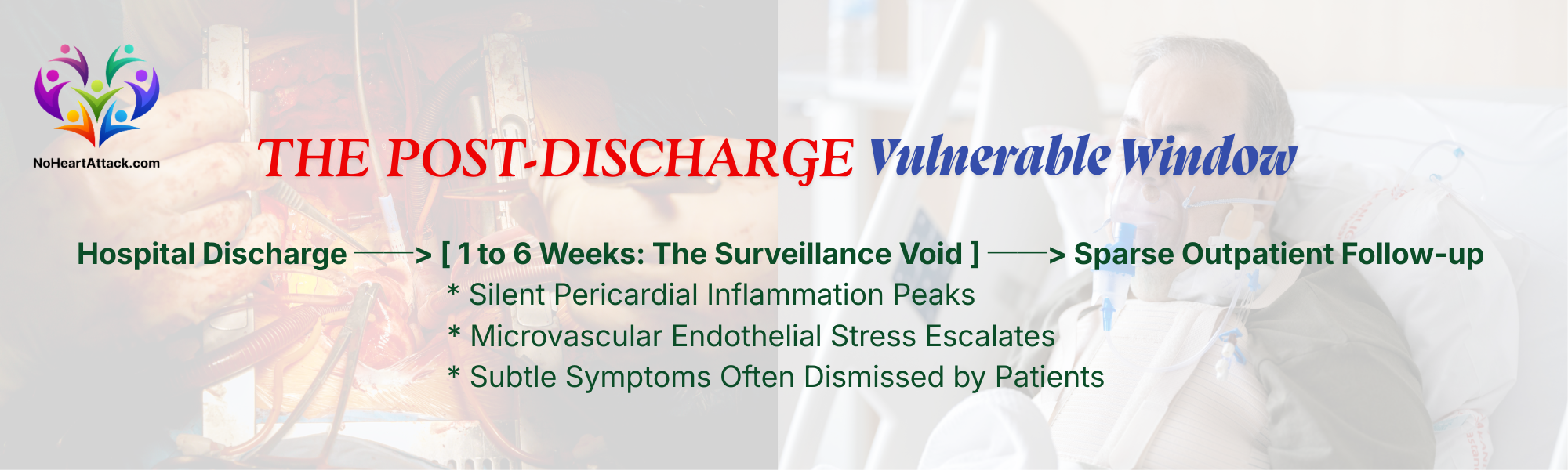
The symptoms are notoriously subtle and easily masked: a low-grade evening fever, vague pleuritic chest discomfort that slightly shifts when leaning forward, persistent fatigue, or an unexplainable deficit in physical energy. Many adults, especially those recovering in long-term care (LTC) facilities or isolating at home, dismiss these warning signs as part of the normal, exhausting journey of recovery. Because conventional clinical follow-ups are episodic and spaced weeks apart, physicians rarely catch the early, non-linear signals of inflammatory decompensation until an emergency readmission becomes unavoidable.
The Macro Trend: An Expanding Paradigm of Vulnerability
With the extraordinary success of pediatric cardiology over the last several decades, the ACHD population in Canada and the United States is expanding rapidly. For the first time in medical history, there are now more adults than children living with congenital heart defects. These individuals are living longer, undergoing more complex re-interventions later in life, and carrying a heavy, cumulative lifetime inflammatory load.
Simultaneously, modern healthcare infrastructure is under intense pressure to reduce the length of hospital stays. Patients are being sent home earlier, transferring the complex burden of transitional care directly onto family members and fragmented outpatient systems. Traditional post-discharge care—consisting of reactive, symptom-driven treatments and occasional clinic appointments—is simply no longer sufficient to safeguard these complex cardiovascular systems.
The Healos™ Canada Advantage: Continuous Digital and Cellular Restoration
The Healos™ Canada Integrative Recovery Architecture transforms this high-risk post-surgical window from a period of fragile survival into an actively managed trajectory of predictable rejuvenation.
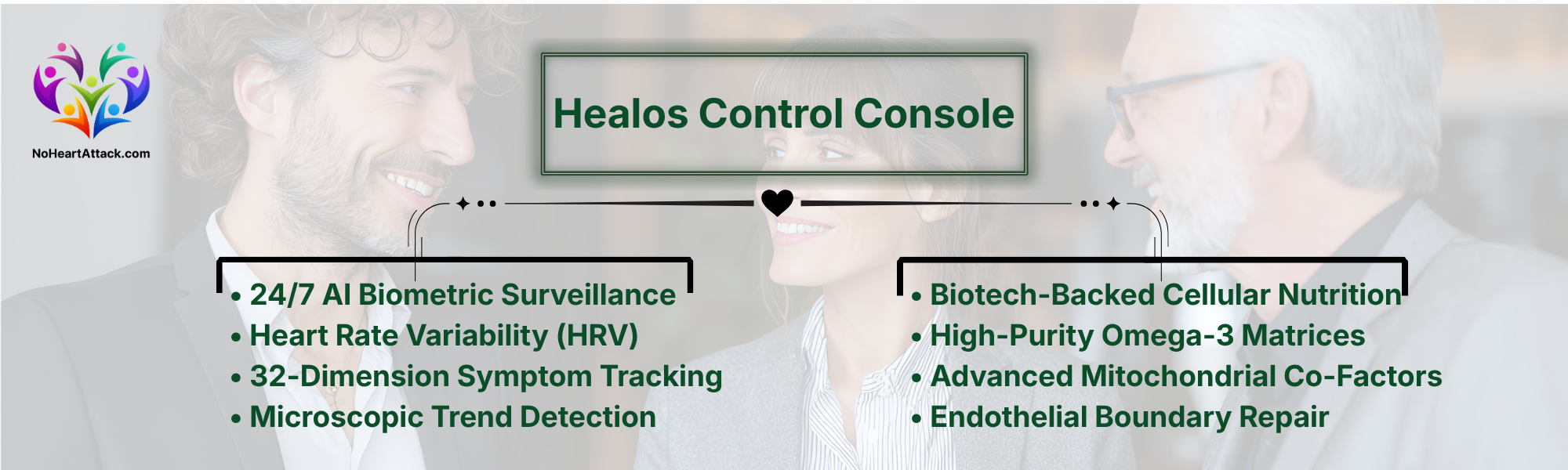
1. 24/7 Integrated AI Surveillance & 32-Dimension Auditing
Healos™ deploys a sophisticated, automated Task Control Console that establishes an uninterrupted digital safety net around the outpatient. By continuously synthesizing continuous biometric tracking (such as resting heart rate trends and heart rate variability) with our proprietary 32-dimension digital symptom assessment tool, our AI engine detects microscopic deviations from a healthy recovery curve days before clinical symptoms become acute. It effectively eliminates the outpatient blind spot, providing real-time oversight when the patient needs it most.
2. Cell-Level Nutritional Architecture for Microvascular Repair
Mitigating subacute pericardial inflammation requires addressing the root metabolic and cellular deficits caused by surgical trauma. The Healos™ protocol features a precisely phased, clinician-guided organic nutrient architecture designed to stabilize tissue ecology during the critical 90-day post-operative window:
Vascular Endothelial Stabilization: Utilizing high-purity, maximum-bioavailability Omega-3 fatty acids (EPA/DHA in structured triglyceride form) to downregulate pro-inflammatory eicosanoid pathways and preserve the delicate endothelial lining.
Mitochondrial Resuscitation: Integrating advanced cellular co-factors, including Coenzyme Q10 (CoQ10) and Pyrroloquinoline Quinone (PQQ), to directly restore ATP production in stressed, ischemic cardiomyocytes and clear profound post-surgical fatigue.
Oxidative Stress Neutralization: Deploying specialized antioxidant matrices to scavenge free radicals within the pericardial space, mitigating subacute tissue remodeling and scarring.
3. True Systemic and Lifestyle Integration
Beyond cellular nutrition and digital surveillance, Healos™ introduces adaptive lifestyle modulation, stress-reduction frameworks rooted in biofeedback, and anatomy-safe movement guidance tailored strictly for the unique hemodynamics of ACHD and stroke recovery profiles. This ensures that the patient's autonomic nervous system transitions away from fight-or-flight stress and into an optimal state of deep, restorative healing.
Bridging the Gap to True Sovereignty
For patients navigating long-term pharmaceutical maintenance after congenital heart surgery, coronary interventions, or stroke events, Healos™ serves as an indispensable lifeline. We complement the critical work of primary cardiologists and surgical teams by extending expert oversight directly into the patient's daily environment.
By managing the exhausting, data-heavy details of daily compliance, lifestyle pacing, and cellular metabolic support, Healos™ reduces the anxiety of recovery, drastically mitigates the risk of inflammatory readmissions, and restores true health autonomy to the individual.
📚 Peer-Reviewed References & Clinical Literature
Incidence and Pathophysiology of PPS in ACHD:
The Journal of Thoracic and Cardiovascular Surgery: Comprehensive multi-center cohort analyses identifying the 22% incidence rate of post-pericardiotomy syndrome in adult congenital cohorts and mapping its delayed subacute inflammatory kinetics.
NCBI PubMed Central - Post-Pericardiotomy Syndrome in Congenital Heart Disease
Omega-3 Fatty Acids and Post-Operative Inflammation:
Circulation (American Heart Association): Clinical trials demonstrating the efficacy of high-dose, high-purity Omega-3 fatty acid supplementation in modulating systemic inflammatory cytokines (IL-6, TNF) and preventing post-operative arrhythmias.
Continuous Digital Oversight and Readmission Mitigation:
The Lancet Digital Health: Clinical validation showing that continuous biometric tracking paired with AI-driven symptom pattern recognition during the immediate 30-to-90 day post-discharge window drastically reduces unexpected secondary readmissions in complex cardiac cohorts.
