#3 Supplement Safety in ACHD: Managing Drug-Nutrient Risks
- Drug-Nutrient Interactions in Long-Term ACHD Management: A Pharmacists Framework for Safe Supplementation Protocols
#Drug-Nutrient Interactions #ACHD Polypharmacy #Anticoagulation Safety #Cardiovascular Recovery #Ottawa Pharmacy
The High-Stakes Intersection of Polypharmacy and Cellular Recovery
For adults living with congenital heart disease (ACHD), surviving a complex cardiac operation or structural intervention is rarely the final chapter of their medical journey. Instead, it marks the entry into a lifelong, highly sensitive maintenance phase. To preserve hemodynamics, prevent thromboembolic events, and suppress dangerous arrhythmias, these individuals are routinely prescribed an aggressive array of narrow therapeutic index medications: from warfarin and direct oral anticoagulants (DOACs) to antiarrhythmics like amiodarone, beta-blockers, and digitalis derivatives.
Concurrently, a massive paradigm shift is occurring. Driven by an evolving understanding of microvascular inflammation, cardiac cachexia, and cellular optimization, patients are increasingly proactive about introducing advanced nutritional supplementation to accelerate their recovery.
This creates a high-stakes clinical crossroads: the territory of drug-nutrient interactions (DNIs). What a patient perceives as an innocent over-the-counter anti-inflammatory, a premium extract, or a high-dose vitamin can drastically alter hepatic metabolic pathways, interfere with renal clearance, or potentiate bleeding risks. For an ACHD patient navigating fragile hemodynamics—such as a single-ventricle configuration or a Fontan circuit—these unmonitored biochemical shifts can be catastrophic.
Up to 40% of cardiovascular outpatients routinely utilize natural health products without disclosing them to their primary care team. At Healos™ Canada, we view this unmonitored baseline as a critical, highly preventable vulnerability in post-surgical care. True integrative health must be built upon an uncompromising foundation of pharmaceutical safety—a framework where clinical nutrition and long-term pharmacotherapy harmonize rather than collide.
The Microscopic Risks: Critical Interaction Dynamics in Complex Cardiovascular Cohorts
Within the post-discharge window and long-term maintenance cycles, specific drug-nutrient interactions carry profound risk profiles. For ACHD survivors and individuals undergoing subacute post-stroke or post-surgical maintenance, the following interactions represent the most critical targets for clinical vigilance:
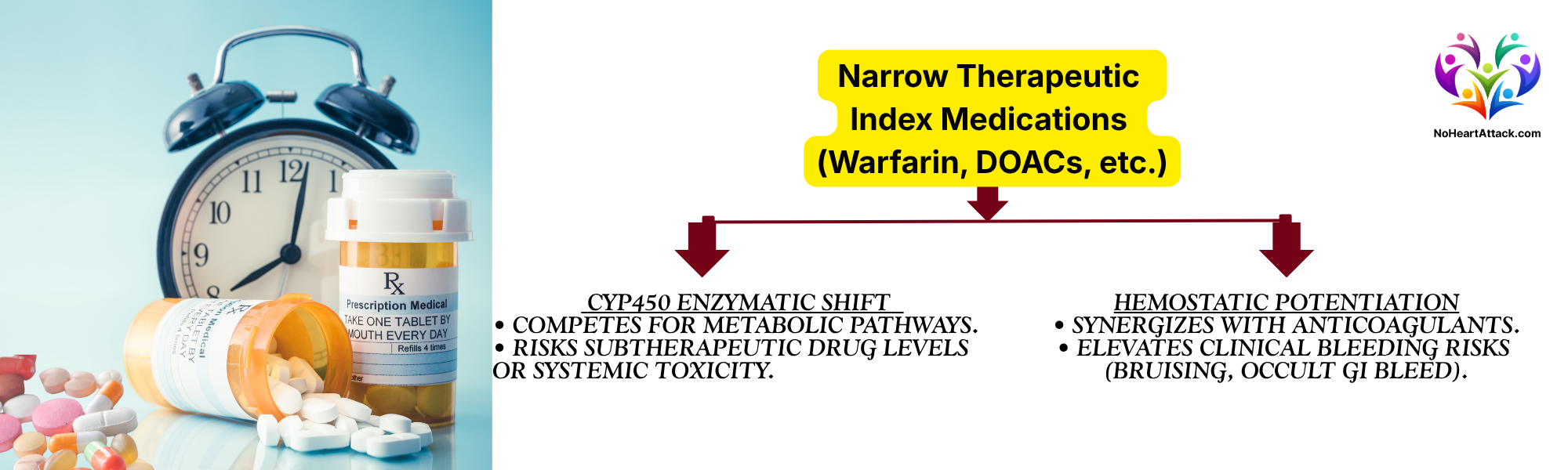
1. Anticoagulation ($Warfarin/DOACs$) and Targeted Lipid Dynamics
Warfarin functions as a strict vitamin K antagonist, demanding high dietary and supplemental consistency to maintain a stable International Normalized Ratio (INR). The introduction of uncalibrated botanical extracts or erratic vitamin K variations can render anticoagulation completely subtherapeutic, drastically raising stroke risks. Conversely, while high-potency Omega-3 fatty acids (EPA/DHA) are profoundly effective at mitigating systemic micro-inflammation and post-operative atrial fibrillation, ultra-high unmonitored doses can exert mild antiplatelet effects. When combined with warfarin or DOACs, this can shift the hemostatic balance, causing unexplained $INR$ spikes, hematomas, or subclinical gastrointestinal bleeding.
2. Antiarrhythmics and Electrolyte-Modulating Substrates
Narrow-spectrum antiarrhythmics, such as amiodarone or sotalol, are highly sensitive to systemic metabolic shifts. Introducing unstandardized botanical supplements or high-dose minerals that alter cellular potassium or magnesium dynamics can induce profound alterations in myocardial repolarization. Furthermore, common herbal compounds can strongly induce or inhibit cytochrome P450 enzymes (specifically CYP3A4), accelerating the clearance of antiarrhythmics and leaving the patient highly vulnerable to breakthrough atrial or ventricular tachyarrhythmias.
3. Heart Failure Pharmacotherapy and Xenobiotic Metabolism
Crucial maintenance medications like ACE inhibitors, beta-blockers, and digoxin depend on predictable renal clearance and specific enzyme pathways. Concurrently consuming unvetted antioxidants or natural extracts can competitively block these pathways, triggering unexpected toxic accumulation or rendering the medication entirely ineffective.
4. Extended Polypharmacy in Long-Term Care (LTC) Settings
This vulnerability scales exponentially within geriatric ACHD survivors and post-stroke patients residing in LTC environments. Managing between 5 to 15 concurrent maintenance medications alongside age-related declines in renal clearance (GFR) and hepatic perfusion, these patients possess virtually no metabolic margin for error. Unmonitored self-supplementation in this cohort is a direct driver of unexplained readmissions and fragile health swings.
The Macro Obstacle: Fragmented Outpatient Surveillance
Modern tertiary cardiology centers across Canada deliver world-class surgical outcomes. However, once a patient transitions out of specialized inpatient wards and back into community care or long-term facilities, a structural disconnect occurs.
Standard outpatient clinic appointments are brief and disproportionately focused on macro-structural metrics. Community pharmacies frequently lack full visibility into the detailed, evolving protocols prescribed by distant tertiary specialists. Left without professional guidance, patients turn to digital search engines or standard retail health stores, selecting generic products that lack standardized extracts or precise dosing clarity.
While Health Canada’s Natural and Non-prescription Health Products Directorate (NNHPD) provides a baseline safety framework through Natural Product Number (NPN) licensing, an NPN certification alone cannot predict an individual’s unique, multi-drug metabolic interactions.
The Healos™ Canada Pharmacist-Led Safety Framework
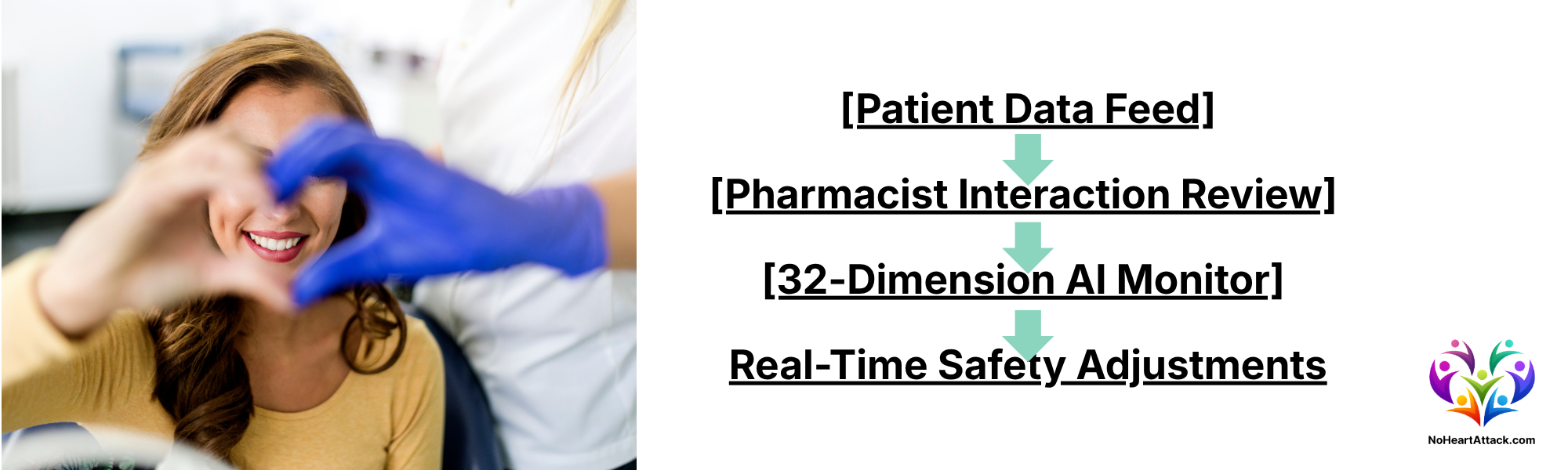
To eliminate this structural blind spot, the Healos™ Canada Integrative Recovery Architecture embeds a comprehensive, pharmacist-validated dual-layer protection matrix directly into our automated Task Control Console. This closed-loop infrastructure ensures that clinical nutrition is deployed with absolute pharmacological precision.
Step 1: Comprehensive Medication-Nutrient Reconciliation
Prior to the design of any targeted cell-level nutritional protocol, a rigorous, clinical review is executed. This process evaluates:
Full medication reconciliation across all long-term prescriptions, over-the-counter options, and historical supplements.
Multi-month longitudinal analysis of lab trends, including $INR$ stability, serum creatinine, eGFR, and hepatic enzyme lines.
Cross-referencing against verified pharmacokinetic databases to chart precise $CYP450$ and P-glycoprotein interaction matrices.
Step 2: Deployment of NPN-Standardized, Pharmacokinetically Clean Formulations
Healos™ Canada strictly utilizes medical-grade, organic nutrient architectures that feature maximum bioavailability with zero unnecessary excipients. Every compound within our 91-day protocols is chosen based on precise pharmacokinetic predictability:
Titrated Omega-3 Triglyceride Matrices: Utilizing ultra-pure, strictly titrated $EPA/DHA$ configurations with highly documented safety and stability data within anticoagulated cohorts.
Biologically Inert Carriers: Selecting anti-inflammatory botanicals and cell-level co-factors (such as $CoQ10$ and $PQQ$) that bypass critical $CYP450$ clearance pathways, preserving the therapeutic concentration of the patient's long-term prescriptions.
Step 3: 24/7 Closed-Loop Digital Surveillance
Once the personalized protocol is launched, the Healos™ control console provides continuous monitoring. Supported by intelligent symptom-pattern recognition algorithms, the system actively tracks daily medication compliance alongside early digital biomarkers of drug-nutrient variances (such as uncharacteristic fatigue, localized bruising trends, or heart rate fluctuations). Any deviation from the safe recovery curve triggers immediate automated alerts, allowing the care team to intercept and adjust dosing schedules before clinical complications can manifest.
Step 4: True Inter-Professional Collaboration
The Healos™ framework is engineered to operate in total alignment with the patient's existing medical circle. By generating clean, data-dense progress summaries and precise metabolic tracking metrics, we offer community pharmacists, LTC medical directors, and primary cardiologists an extended, uninterrupted window into the patient’s daily health ecology. This approach strengthens the therapeutic alliance and ensures cohesive care.
📚 Peer-Reviewed References & Clinical Literature
Prevalence and Risk of Drug-Nutrient Interactions in Cardiology:
The American Journal of Cardiology: Prospective studies mapping the widespread use of herbal and nutritional supplements among cardiovascular outpatients and quantifying the incidence of undocumented drug-nutrient interactions.
NCBI PubMed Central - Supplement Use and Safety in Cardiac Cohorts
Pharmacokinetics of Omega-3 and Anticoagulation Interaction:
Journal of Thrombosis and Thrombolysis: Controlled clinical trials evaluating the hemostatic effects of high-purity Omega-3 fatty acids when co-administered with warfarin or novel DOACs, demonstrating safe therapeutic windows under professional surveillance.
Cytochrome P450 and Botanical Metabolism Interferences:
Clinical Pharmacokinetics: Systematic reviews detailing the enzymatic pathways ($CYP3A4$, $CYP2C9$) utilized by common bio-nutritional compounds and their direct impact on narrow therapeutic index cardiovascular drugs.
Polypharmacy Optimization in Post-Discharge and LTC Environments:
The Lancet Healthy Longevity: Longitudinal clinical validation proving that structured, multi-disciplinary medication reconciliation paired with digital compliance tracking significantly reduces outpatient adverse drug events in vulnerable post-surgical cohorts.
